Ditching PTFE for Lifelong Heirloom Metals
Synthetic nonstick coatings have a short shelf life and carry risk of chemical off-gassing when overheated. In contrast, heirloom metals like raw cast iron, carbon steel, and enameled cast iron improve with age and provide lifetime non-toxic cooking.
Choosing the right heirloom metal comes down to your cooking technique: raw cast iron excels at extreme heat retention, carbon steel delivers high-heat agility, and enameled cast iron provides acid-safe braising without any seasoning maintenance.
Raw Cast Iron: Unmatched Thermal Mass & Searing Power
Raw cast iron pans, such as the classic Lodge 10.25 Inch Skillet, possess immense thermal mass. Once heated, they hold their temperature remarkably well when cold steaks or vegetables enter the pan.
Over time, cooking with natural fats creates a slick polymer patina that releases fried eggs effortlessly while completely avoiding PTFE and PFAS chemicals.
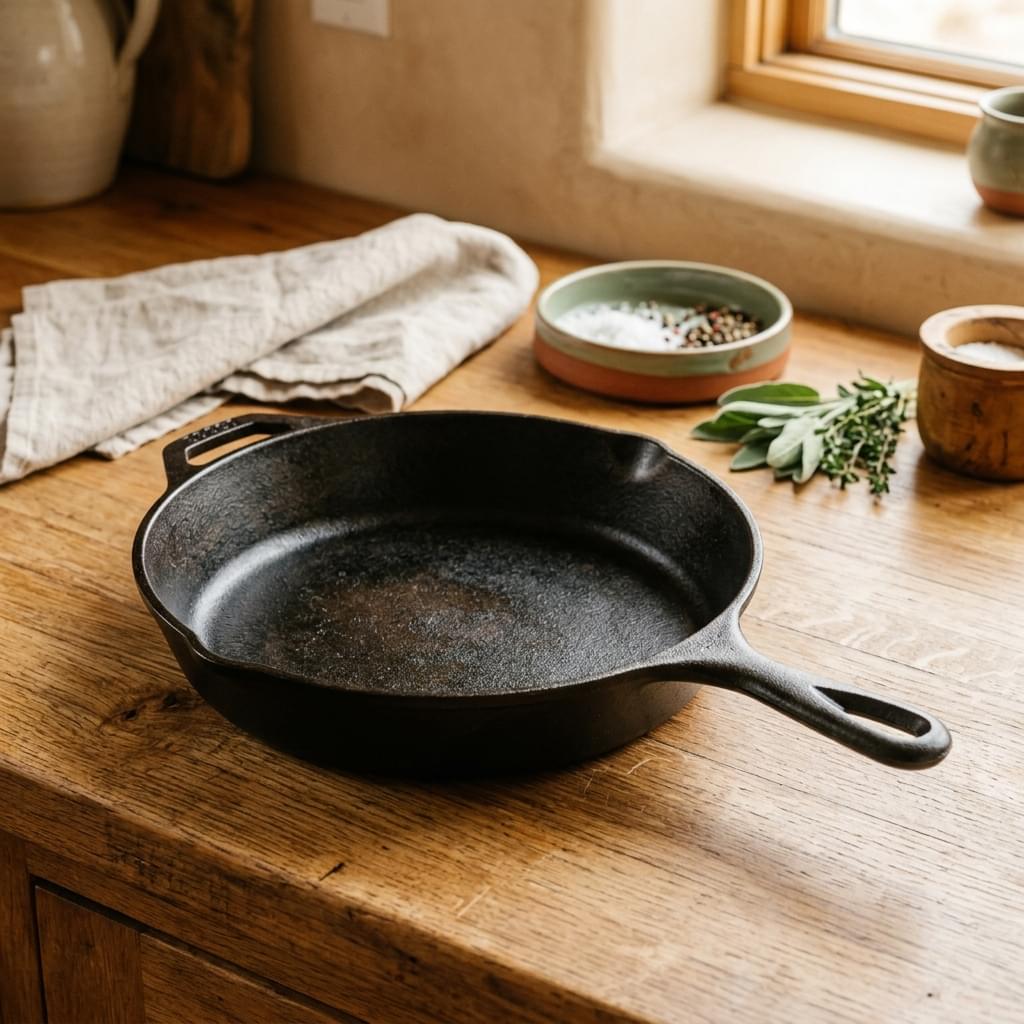
A timeless classic that belongs in every kitchen. The Lodge cast iron skillet is pre-seasoned and ready to use, providing excellent heat distribution for searing, baking, and frying without toxic coatings.
Carbon Steel: Lightweight Agility for Stir-Frying & Eggs
Carbon steel shares the natural seasoning chemistry of cast iron but contains less carbon, allowing it to be forged thinner and lighter. Pans like the De Buyer Mineral B carbon steel skillet heat up and cool down rapidly.
This responsiveness makes carbon steel the ideal choice for high-heat wok toss cooking, French omelets, and quick searing where precise temperature control is required.
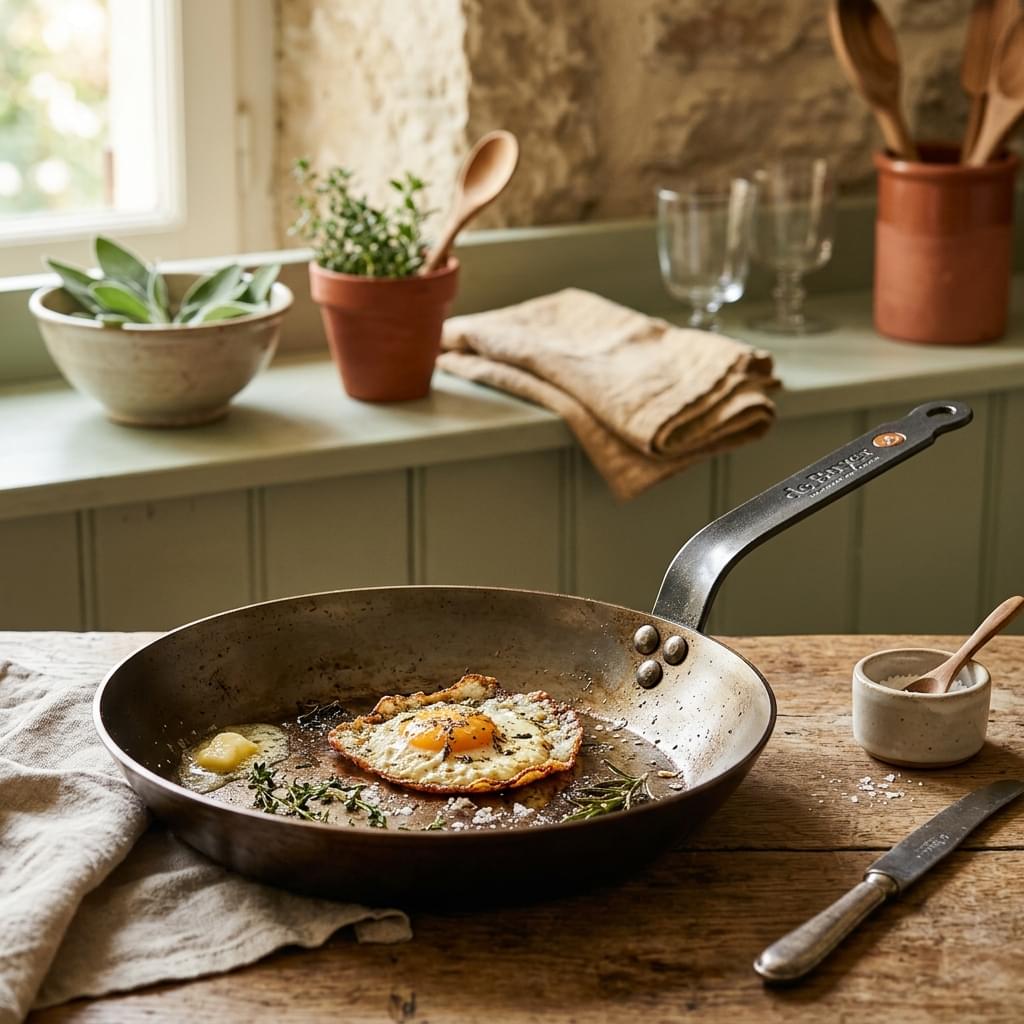
Professional grade carbon steel that becomes naturally non-stick over time. It heats up quickly and can handle extreme temperatures for the perfect sear.
Enameled Cast Iron: Non-Reactive Braising Without Seasoning
For slow-simmered stews, tomato sauces, and acidic braises, vitreous enamel coatings offer the massive heat retention of cast iron without reacting to acidic ingredients.
Dutch ovens like the Lodge 6-Quart Enameled Dutch Oven feature a non-porous glass glaze that requires zero seasoning and transitions seamlessly from stovetop to high-heat ovens.
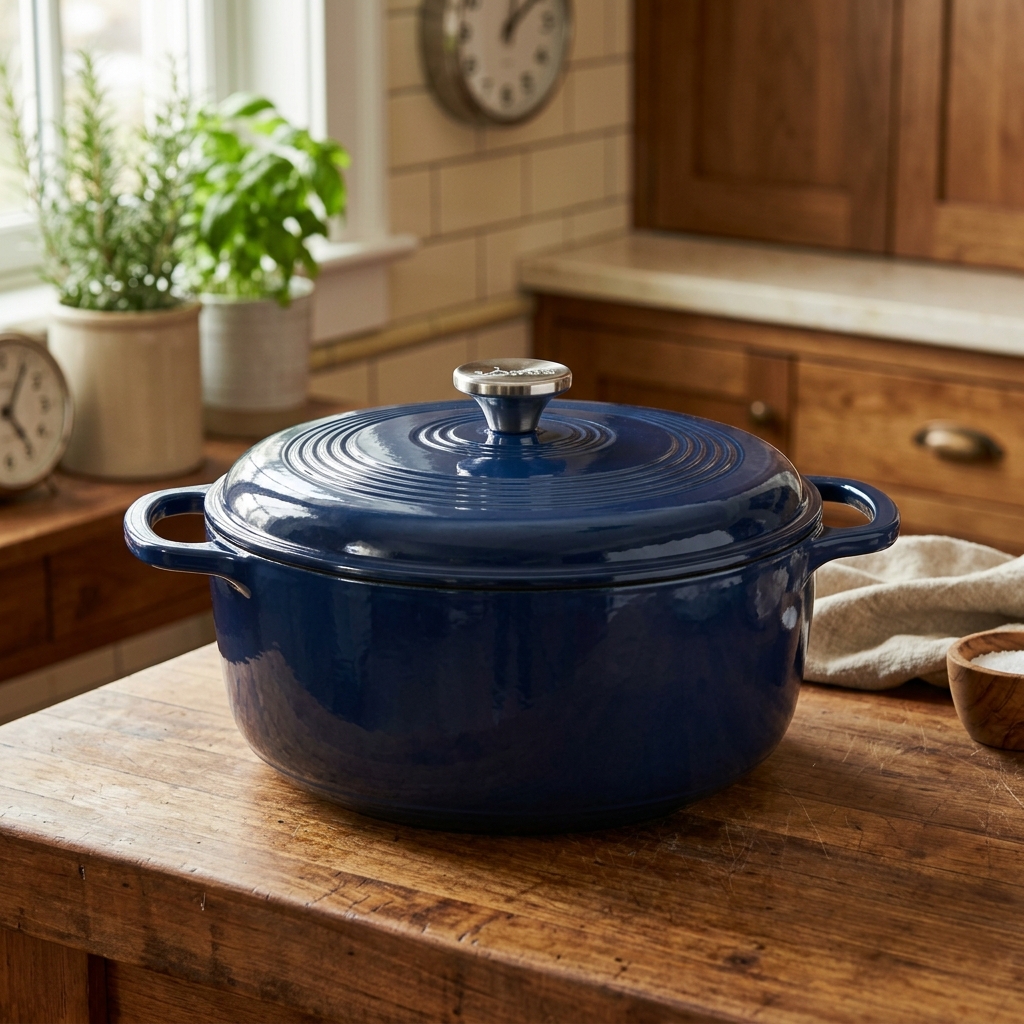
An American kitchen staple. Heavy cast iron coated in smooth porcelain enamel eliminates the need for chemical non-stick while offering superior heat distribution for slow-simmered stews, roasts, and sourdough bread.
The Heirloom Pan Verdict: Which Surface Belongs in Your Kitchen?
If you want a budget-friendly indestructible pan for heavy searing, start with raw cast iron. If you prefer agile tossing and fast response, choose carbon steel like Yosukata or De Buyer. For soup and stew braises, enameled cast iron remains unbeatable.
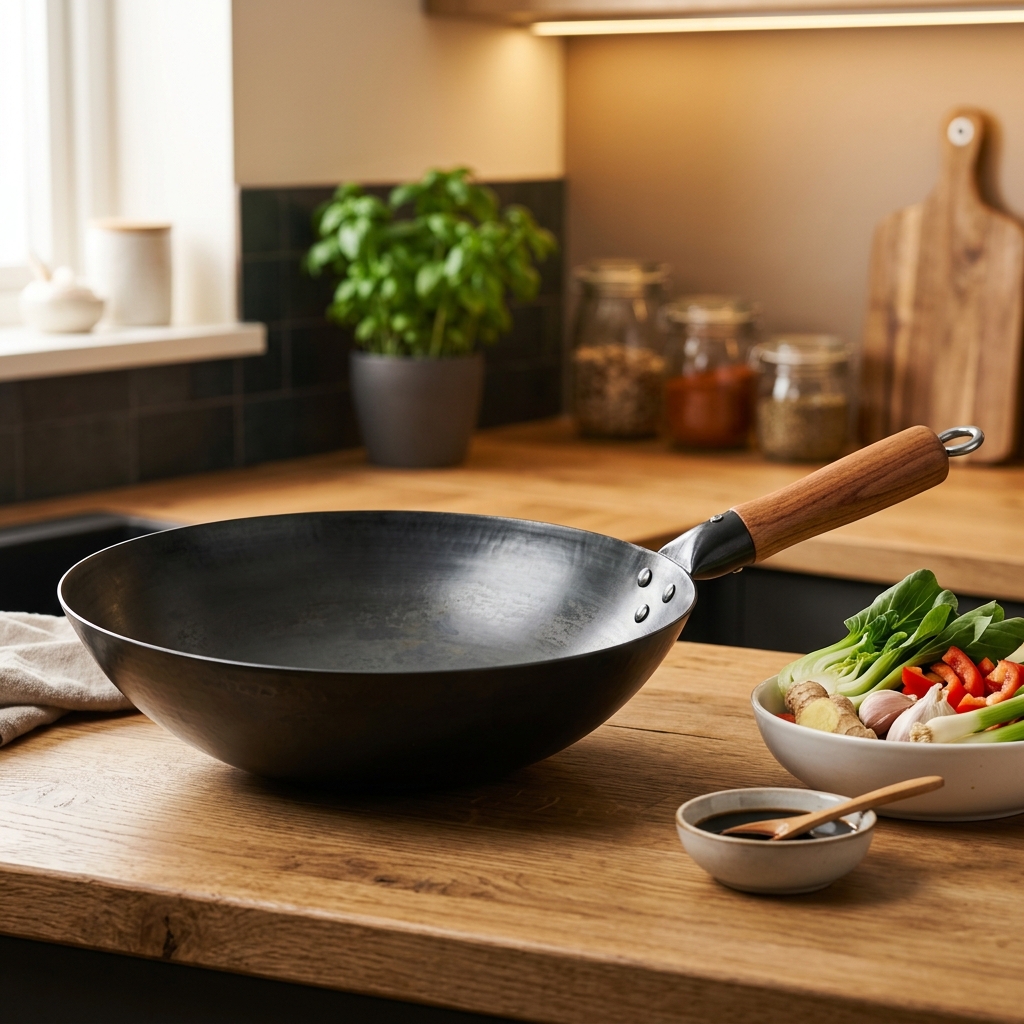
Crafted from high-grade black carbon steel and pre-seasoned at 1000°F, this traditional flat-bottom wok delivers high-heat wok hei flavor without a drop of chemical non-stick coating.
Heirloom Pan Selector & Cooking Match
Select your cooking habits, weight preference, and care style to find your ideal heirloom pan.
Ideal for quick agile meals, stir-fry tossing, and daily eggs. At just 3.2 lbs, carbon steel heats up rapidly and builds a natural non-toxic oil seasoning patina over time.
How we match the right heirloom pan to your cooking style
| Material | Pan Weight | Best For | Maintenance | Recommended Product |
|---|---|---|---|---|
| Carbon Steel | 3.2 lbs (Light) | Eggs, fish, stir-fry tossing | Natural oil seasoning | De Buyer Mineral B Frying Pan |
| Raw Cast Iron | 5.4 lbs (Heavy) | High-heat steak searing, baking | Natural oil seasoning | Lodge 10.25" Pre-Seasoned Skillet |
| Enameled Cast Iron | 13.5 lbs (Heavy Dutch Oven) | Slow stews, acidic tomato sauce | Dish soap safe, zero oil care | Lodge 6-Quart Enameled Dutch Oven |
Expert Answers & Material Science Q&A
Can you cook acidic foods like tomatoes in raw cast iron?
Avoid cooking highly acidic dishes in raw cast iron for long periods, as acid breaks down the seasoning patina. Use enameled cast iron or stainless steel instead.
How do you season a carbon steel pan for the first time?
Wash off factory wax, dry thoroughly, apply a thin coat of high-smoke-point oil, and heat on the stovetop until the metal turns dark brown or blue-black.
Is carbon steel lighter than cast iron?
Yes, carbon steel is 40% to 50% lighter than traditional cast iron because carbon steel can be forged thinner while retaining strength.
Can enameled cast iron go in the oven at high heat?
High-quality enameled cast iron is oven safe up to 500°F (260°C). Check phenolic handle knobs, which should be upgraded to stainless steel for high heat.