What Is Sol-Gel Ceramic Cookware?
True ceramic nonstick coatings are derived from natural sand and processed through a sol-gel solution into a glass-like silica surface. Unlike traditional nonstick, mineral ceramics require no PFAS, PTFE, PFOA, or toxic binders.
When subjected to high cooking temperatures, mineral ceramic glazes emit zero chemical fumes, making them the safest nonstick option for everyday cooking.
The Granite and Stone Marketing Illusion
Many cookware brands use terms like 'granite' or 'stone' purely as aesthetic descriptors. In many cases, these pans are standard aluminum skillets finished with a decorative speckled pattern over traditional PTFE nonstick.
To ensure your cookware is genuinely toxin-free, always look for explicit 'PTFE-Free' and 'PFAS-Free' certifications rather than relying on stone-themed product names.
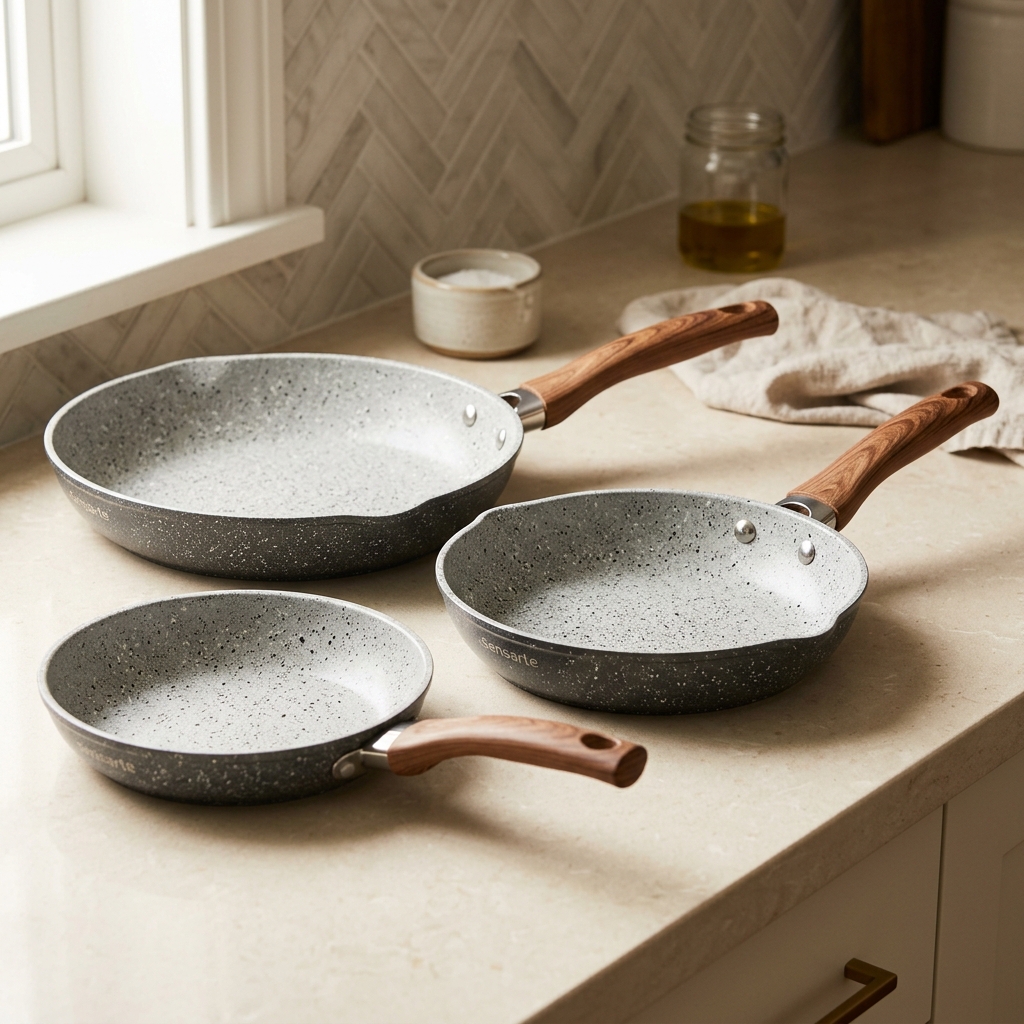
Sensarte's top-rated skillet set features an imported Swiss mineral granite coating. 100% PFOA and PFAS-free, it delivers effortless non-stick release for morning eggs and searing meats without heavy oils.
Uncoated Stainless Steel: The Indestructible Alternative
For home cooks seeking a pan that never wears out, 3-ply stainless steel like the All-Clad D3 Frying Pan provides a completely inert, non-reactive cooking surface.
By preheating your stainless skillet properly, you can achieve natural food release for meats and vegetables without relying on synthetic or delicate surface glazes.
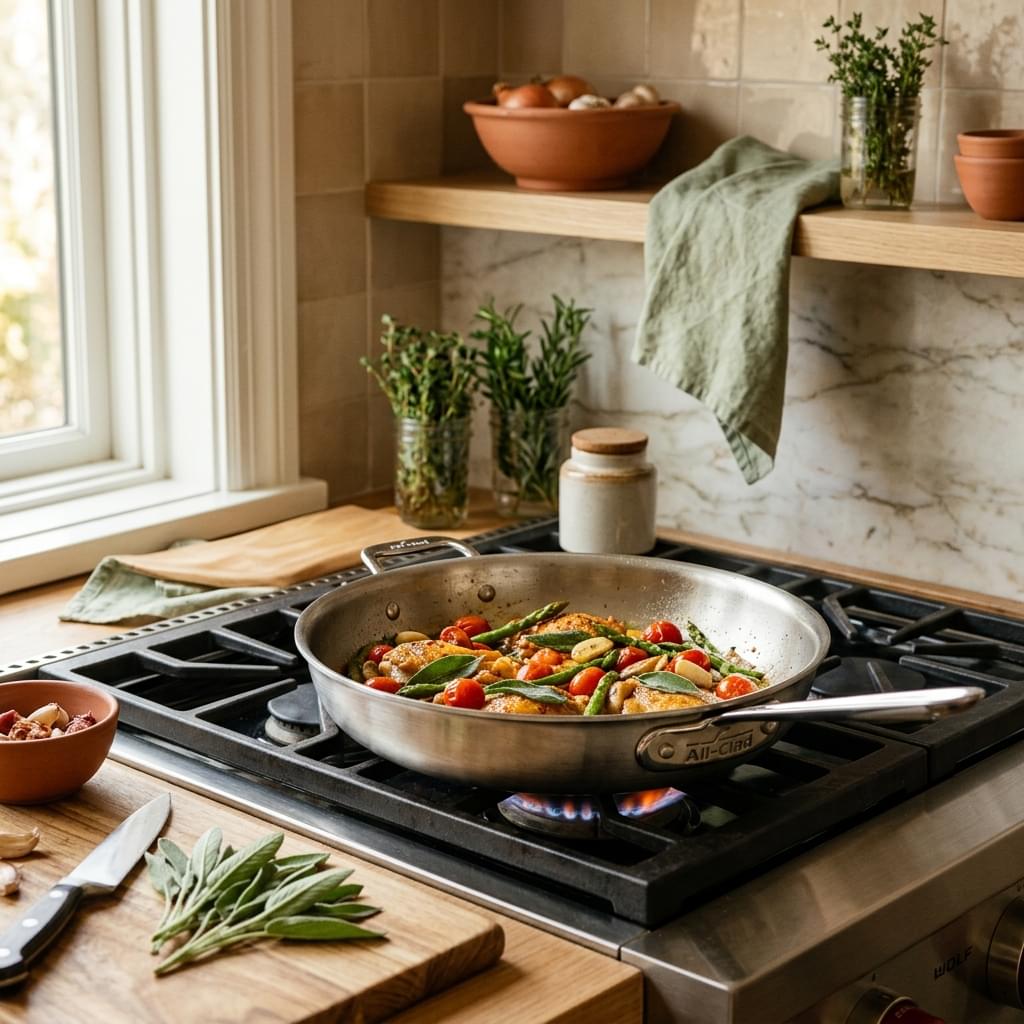
Premium stainless steel cookware that delivers even heat distribution. Its classic tri-ply construction is built to last a lifetime and handle any recipe.
Protecting Your Glaze: Organic Utensil Rules
To preserve the nonstick slickness of ceramic glazes, avoid metal spatulas and harsh abrasives that can cause microscopic surface micro-scratches.
Using organic bamboo utensils like the Totally Bamboo 6-Piece Set or food-grade silicone tools ensures smooth flipping while protecting pan longevity.
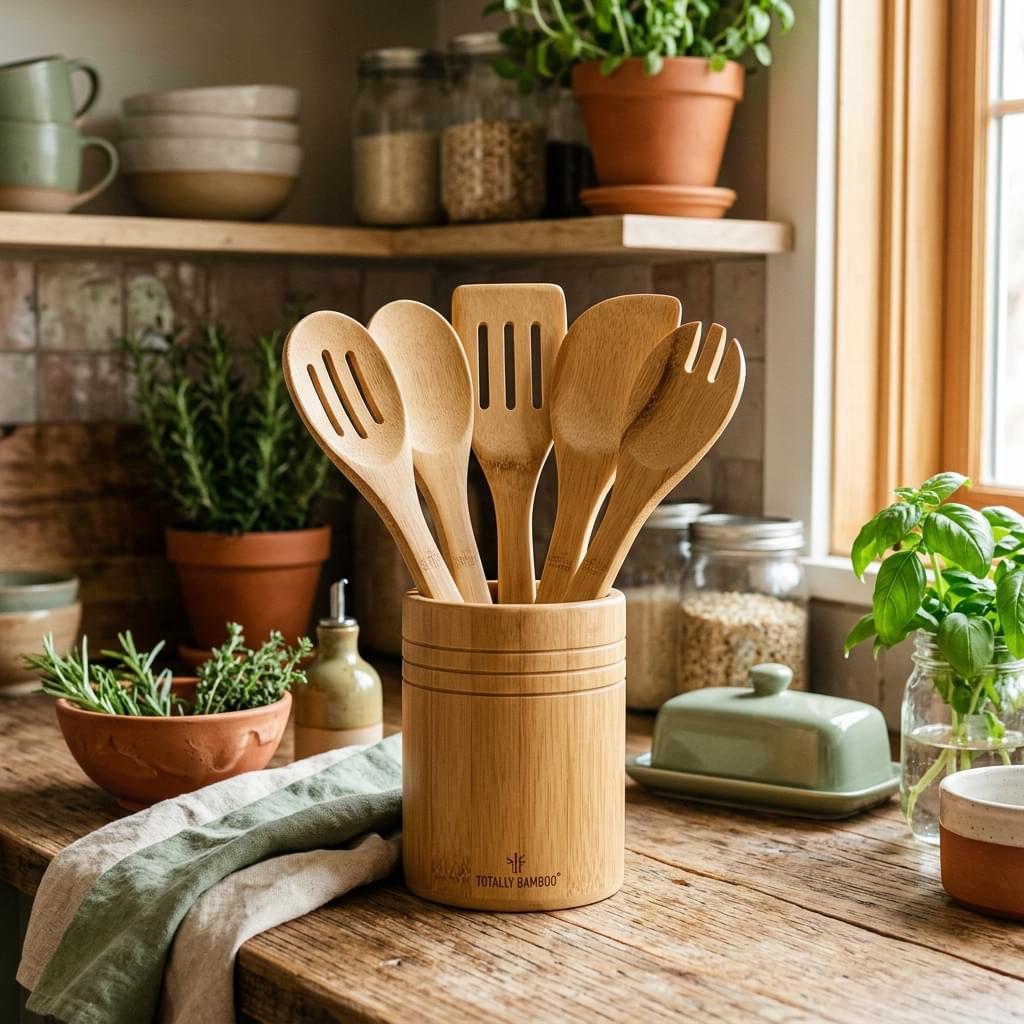
A beautiful and sustainable set of cooking utensils. Bamboo is harder than most woods, meaning these tools will last longer while keeping your cookware scratch-free.
The 4-Point Kitchen Cookware Audit Checklist
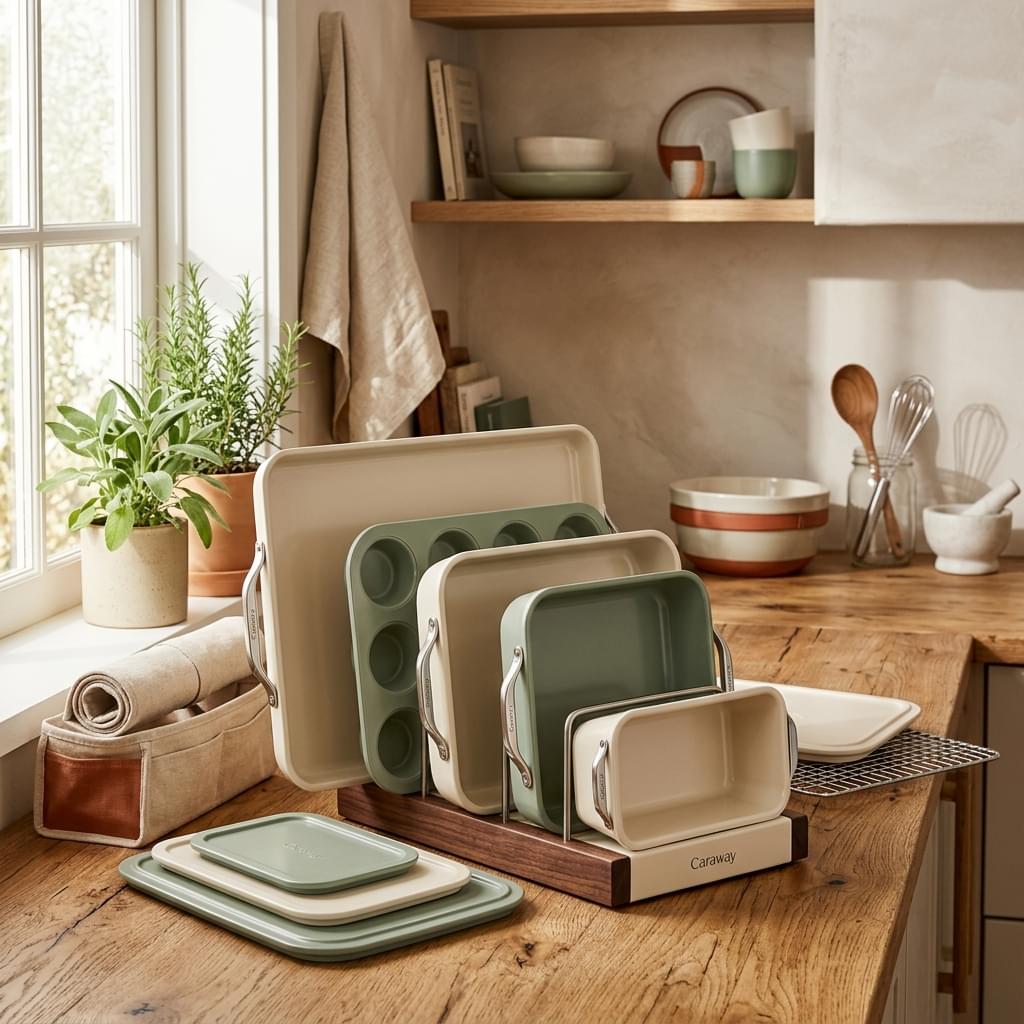
Auditing your kitchen is straightforward: verify zero PTFE/PFAS certifications, check for chipped or flaking surfaces, switch to non-scratch utensils, and choose proven brands like Caraway or GreenPan Valencia Pro.
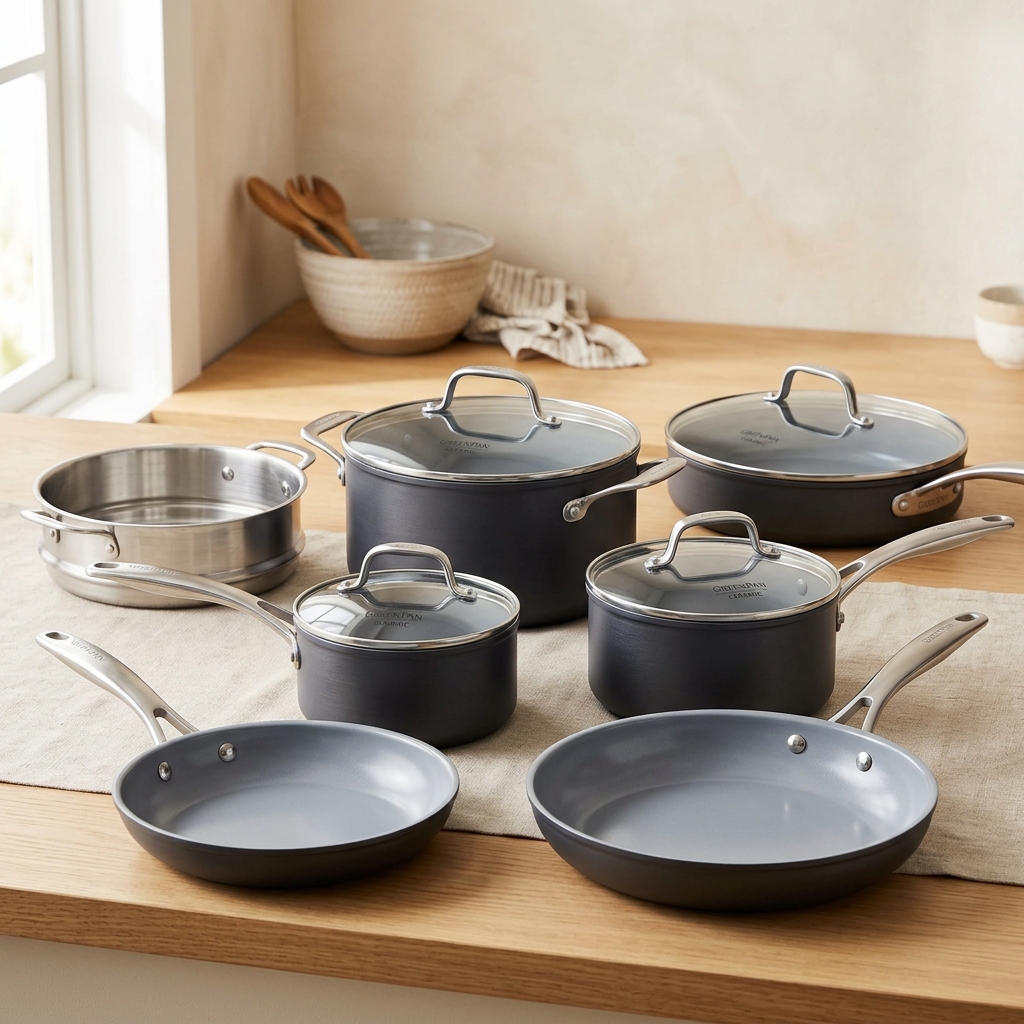
GreenPan's flagship Valencia Pro set features Thermolon minerals derived from sand. Free from PFAS, PFOA, lead, and cadmium, it will never release toxic fumes, even if accidentally overheated up to 600°F.
"Is My Pan Safe?" Non-Toxic Marketing Decoder & Safety Audit
Select your cookware coating label to decode marketing buzzwords, check off-gassing thresholds, and find a safe swap.
Traditional Teflon / PTFE Nonstick
500°F (260°C)
Marketing Decoder: PTFE fluoropolymers degrade when heated past 500°F, off-gassing chemical fumes into indoor air and wearing off into food over time.
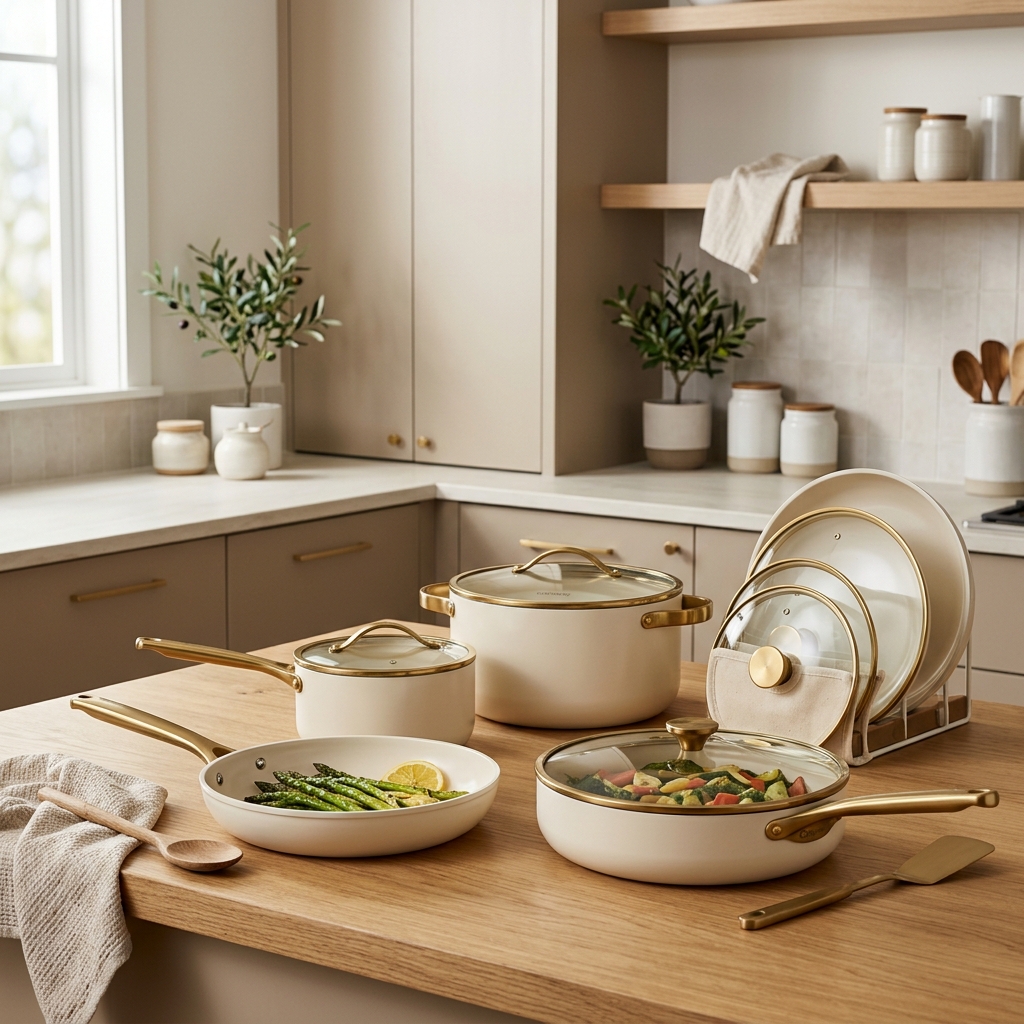
Replaces PTFE completely with a natural silica mineral glaze that emits zero toxic fumes at high heat.
How we audit cookware coatings and safety thresholds
| Coating Type | Safety Grade | Off-Gas Threshold | Chemical Composition | Recommended Non-Toxic Swap |
|---|---|---|---|---|
| Traditional Teflon / PTFE | F | 500°F (260°C) | Synthetic fluoropolymers | Caraway Ceramic Set |
| Speckled Granite / Stone | D+ | 500°F (260°C) | PTFE base with stone print | Sensarte Swiss Granite Ceramic |
| Diamond / Titanium Nonstick | D | 500°F (260°C) | PTFE with diamond dust | All-Clad D3 Stainless Steel |
| Hard Anodized Ceramic | A | 600°F+ (Zero Fumes) | Anodized aluminum + silica glaze | GreenPan Valencia Pro |
| Sol-Gel Mineral Ceramic | A+ | 550°F+ (Zero Fumes) | Sand-derived silica glaze | Caraway Ceramic Set |
| Raw Carbon Steel / Cast Iron | A+ | 1000°F+ (Indestructible) | 100% Seasoned Iron Metal | Lodge Cast Iron Skillet |
Expert Answers & Material Science Q&A
Is granite cookware safe and non-toxic?
Check certifications. Many pans labeled 'granite' are aluminum skillets with decorative speckled PTFE finishes. Look explicitly for PTFE-free and PFAS-free labels.
What is sol-gel ceramic cookware made of?
Sol-gel ceramic cookware is made from sand-derived silica transformed into a smooth glass-like mineral glaze through a liquid gel process.
Do ceramic nonstick pans lose their slickness over time?
Mineral ceramics maintain slickness when cooked on low-to-medium heat and hand washed with soft sponges. High heat accelerates wear.
Why avoid aerosol cooking sprays on ceramic pans?
Aerosol sprays contain chemical propellants that bake onto ceramic glazes, forming an invisible residue that destroys nonstick release.