Quick Verdict: HexClad vs All-Clad D3
Choose All-Clad D3 for unmatched lifetime durability, 100% non-toxic zero-coating purity, golden pan sauce fond, and an unlimited lifespan that never degrades. Choose HexClad if you want faster weeknight cleanup and hybrid nonstick convenience, but accept that its synthetic PTFE nonstick valleys eventually wear down over five to seven years.
Material Construction: Heirloom Tri-Ply Steel vs Etched PTFE Matrix
All-Clad D3 is handcrafted in Canonsburg, Pennsylvania, utilizing a classic tri-ply bonded construction.
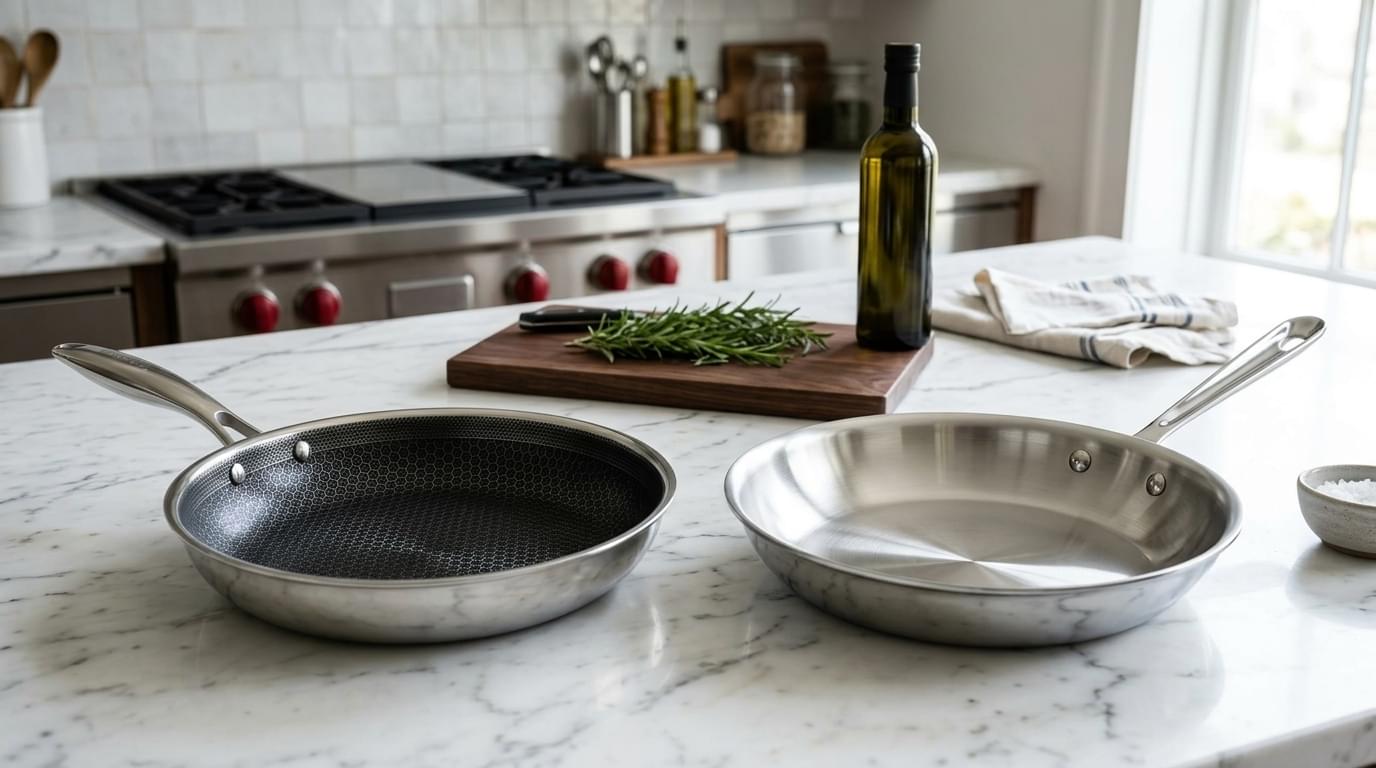
A thick commercial aluminum core is permanently bonded between an interior layer of surgical 18/10 stainless steel and a magnetic exterior steel base.
Because All-Clad has zero synthetic coatings, glazes, or fluoropolymers, it is chemically inert and completely incapable of releasing fumes even at extreme temperatures.
HexClad pairs tri-ply metal with a proprietary laser-etched hexagonal lattice of stainless steel ridges.
The microscopic valleys between those ridges contain synthetic PTFE nonstick resin, meaning HexClad still relies on fluoropolymer chemistry.
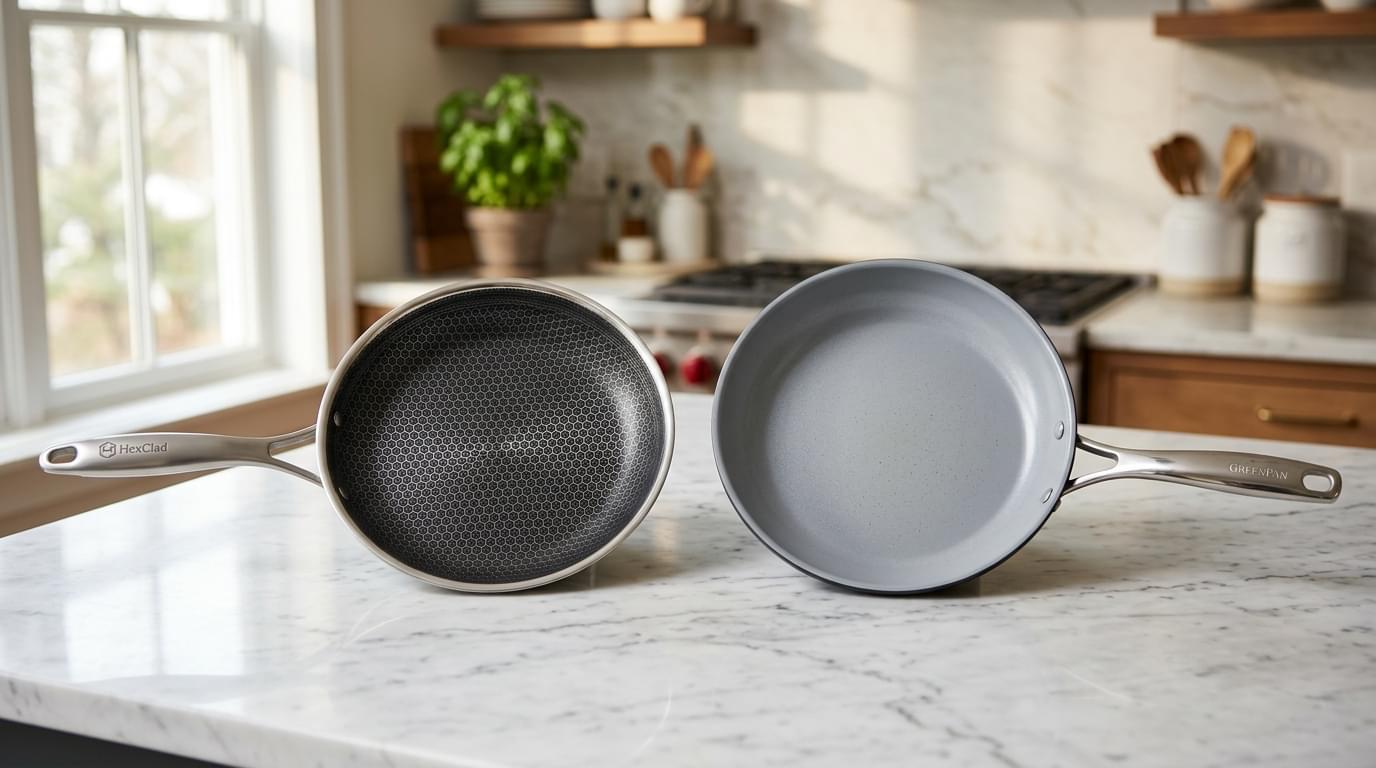
To understand how hybrid surfaces compare to pure ceramic coatings, read our HexClad vs GreenPan Valencia Pro Showdown.
Searing Performance: Steak Caramelization & Rich Pan Deglazing
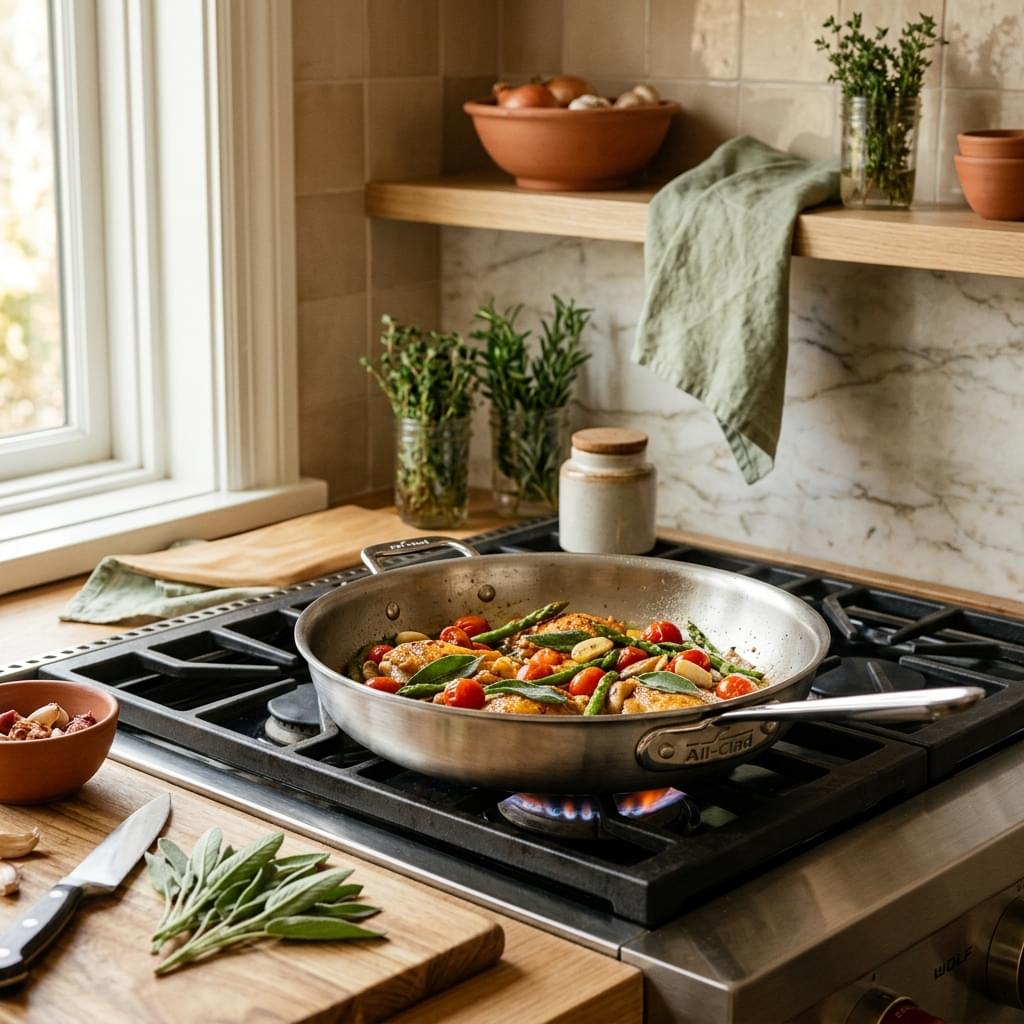
When searing ribeyes, duck breasts, or thick pork chops, All-Clad D3 creates superior crust formation.
Proteins lightly adhere to the stainless steel cooking surface, developing deep caramelized fond as moisture evaporates.
Deglazing that fond with dry white wine or beef stock yields velvety, rich pan sauces that cannot form as easily on nonstick surfaces.
HexClad sears effectively due to its raised stainless steel ridges, but its nonstick valleys reduce fond accumulation.
For testing alternative non-toxic cookware for high-heat cooking, review our 5 Best HexClad Alternatives Guide.
Longevity & Care: 50-Year Stainless Steel vs 5-Year Hybrid Lifespan
HexClad provides easier weeknight dishwashing because melted cheeses, sauces, and gravies release from its PTFE valleys with a soft sponge.
However, all PTFE coatings experience progressive microscopic abrasion and oil carbonization over years of regular cooking.
All-Clad D3 requires learning proper heat management (the Leidenfrost water droplet test) and oil preheating to prevent sticking.
When burnt residue does occur on All-Clad, a sprinkle of Bar Keepers Friend and a gentle scrub restores the pan to a brand-new factory shine.
While All-Clad can technically survive a dishwasher cycle, harsh powder detergents will eventually cloud the exterior finish and erode the exposed aluminum rim over time, making hand washing the smarter choice.
An All-Clad stainless skillet will literally last fifty years or more, outliving several generations of nonstick cookware.

The pioneering hybrid skillet endorsed by Gordon Ramsay. HexClad combines the high-heat searing capability of stainless steel with the effortless release of nonstick cookware, protecting recessed nonstick valleys behind laser-etched stainless steel ridges.
Pro tip: Add to Cart on Amazon to secure today's sale price!
Kitchen Handling & Broiler Limits: U-Channel Handles vs 600°F Tolerance
Handling comfort also separates the two skillets during daily stovetop maneuvering.
All-Clad D3 features a signature concave, grooved U-channel handle engineered to lock firmly into a folded kitchen towel, though cooks with smaller hands may find its angular profile less comfortable.
HexClad equips its pans with a rounded, stay-cool ergonomic handle that feels softer in the palm during quick sautés.
In the oven, All-Clad D3 pan bodies and solid cast handles are broiler safe up to 600°F, allowing high-intensity radiant browning.
HexClad is capped at 500°F, as subjecting PTFE coatings to broiler temperatures above 500°F risks polymer degradation.
To learn more about chemical breakdown thresholds across cookware materials, check our PTFE vs Ceramic Off-Gassing Safety Audit.
Who Is This NOT For?
Pass on All-Clad D3 if you demand instant, oil-free egg sliding right out of the box without mastering pan preheating and butter temperature.
For chaotic weekday mornings, keep a dedicated $25 ceramic skillet for eggs, and reserve your All-Clad for evening proteins, searing, and pan sauces.
Pass on HexClad if you are investing in lifelong heirloom cookware or want to completely eliminate fluoropolymers from your kitchen.
If you want effortless morning eggs with non-toxic mineral release under $40, explore our CAROTE vs Sensarte Crepe & Egg Pan Guide.
Expert Answers & Material Science Q&A
Is All-Clad better than HexClad for everyday home cooking?
All-Clad is far superior for 50-year longevity, fond creation, and 100% chemical-free cooking, while HexClad wins strictly for short-term nonstick convenience.
Will food stick to an All-Clad D3 stainless steel pan?
Food sticks only if the pan is cold; preheating the skillet until water droplets bead into balls (the Leidenfrost effect) prevents sticking.
Can I use metal utensils on All-Clad D3?
Yes, All-Clad D3 is solid 18/10 stainless steel with no coating to scratch or chip, making it completely metal utensil safe.
How long will a HexClad pan last compared to All-Clad?
HexClad typically lasts five to seven years before its PTFE valleys wear down, while an All-Clad D3 stainless steel pan lasts decades.
Is All-Clad D3 compatible with induction cooktops?
Yes, All-Clad D3 features a magnetic exterior stainless steel layer that couples efficiently with all induction burners.