
Quick Verdict: Yosukata Wok vs De Buyer Skillet
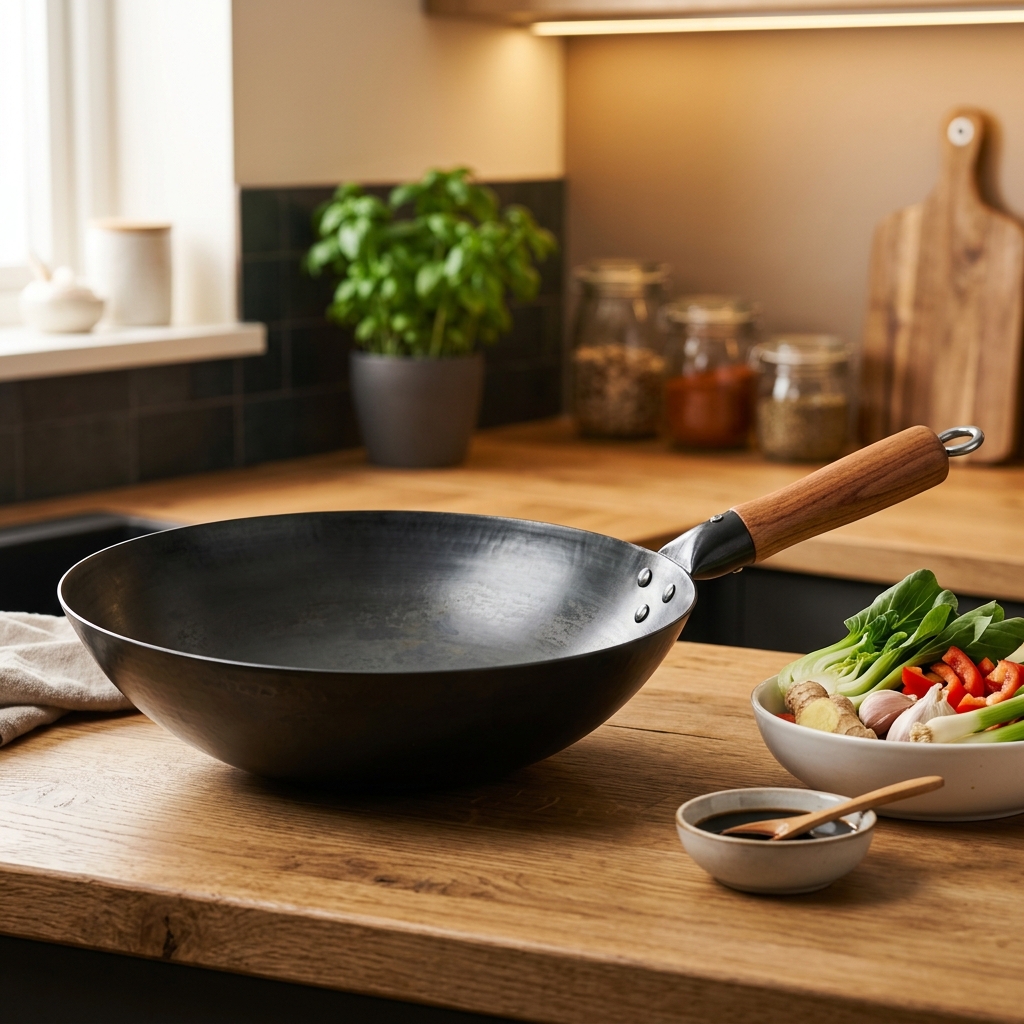
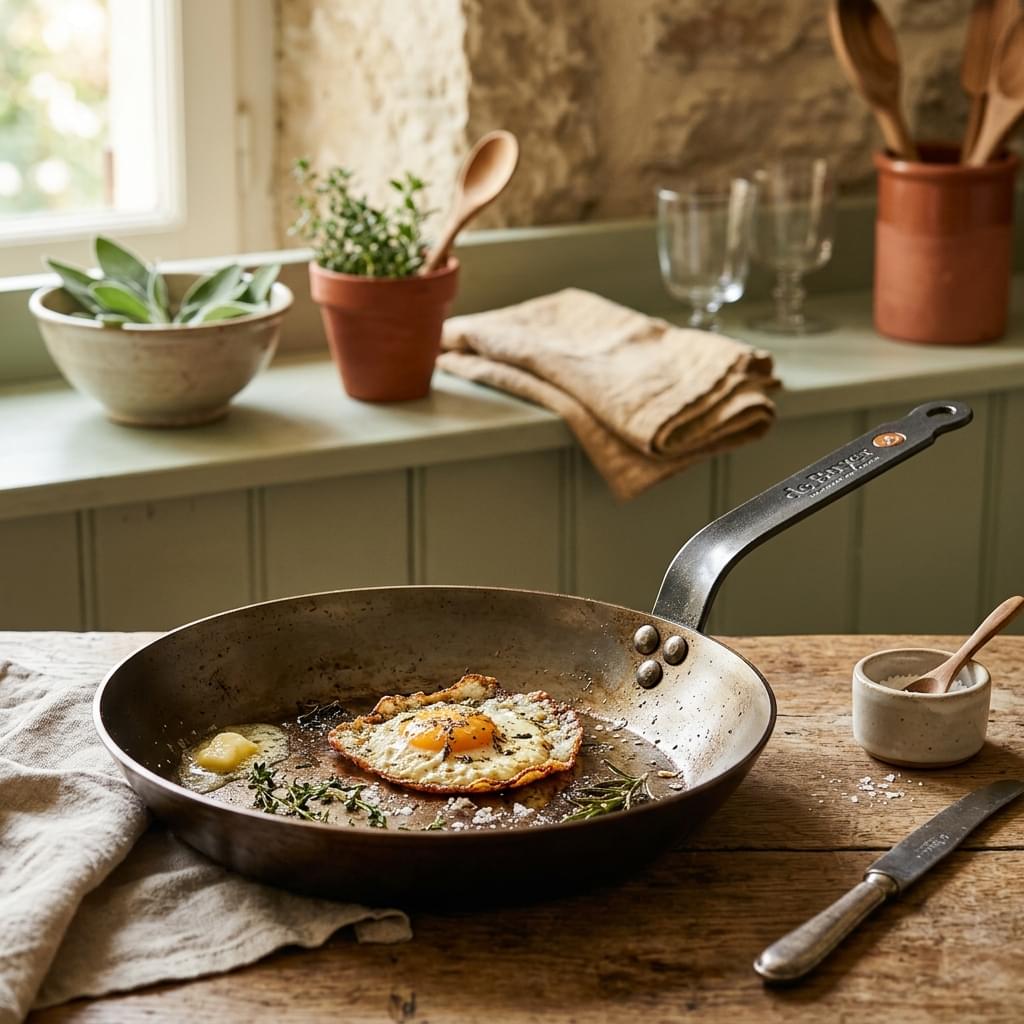
Yosukata 14-inch Carbon Steel Wok is better for high-heat stir-frying, wok hei searing, and immediate cooking convenience out of the box due to its factory 1000°F pre-seasoning. De Buyer Mineral B French Skillet is better for western pan-searing, thick steak browning, and stovetop-to-oven roasting due to its extra-thick 3mm heavy carbon steel wall and protective organic beeswax finish.
Metallurgical Construction: 1.5mm Black Carbon Steel vs 3mm Heavy Gauge
Comparing raw metallurgical profiles, Yosukata features a 1.5mm high-grade black carbon steel bowl engineered for rapid thermal responsiveness and agile tossing over high-BTU gas burners or flat induction zones.
De Buyer Mineral B utilizes a dense 3mm heavy-gauge French carbon steel construction that retains massive heat mass, resisting temperature drops when heavy cold proteins enter the pan.
Choose Yosukata if you prioritize fast stir-fry heat control, high-rim food tossing, and factory pre-seasoned readiness. Choose De Buyer if you need maximum thermal retention for crust formation on steaks and chops.
Professional grade carbon steel that becomes naturally non-stick over time. It heats up quickly and can handle extreme temperatures for the perfect sear.
Pro tip: Add to Cart on Amazon to secure today's sale price!
Initial Seasoning: Factory 1000°F Thermal Pre-Treatment vs Beeswax Protection
Initial seasoning effort differs radically between these European and Asian steel makers: Yosukata undergoes high-temperature thermal oil treatment at 1000°F in the factory, producing a deep blue-black oxide layer that requires only a brief initial wash and single oil wipe before cooking.
De Buyer ships coated in natural organic beeswax to prevent transit rust, requiring a thorough hot water scrub to strip the wax followed by manual oven or stovetop oil seasoning cycles to establish initial nonstick slickness.
Ergonomics and Cooking Geometry: Stir-Fry Wok vs Flat French Skillet
Vessel geometry dictates daily cooking utility: Yosukata incorporates a deep sloped bowl with a natural beechwood handle and stainless steel helper loop, ideal for deep-tossing noodles, vegetables, and rice without spilling.
De Buyer features classic French skillet geometry with low flared sidewalls and an epoxy-coated strip steel handle designed for precise spatula flipping and oven finishing below 400°F.
Who Is This NOT For?
Skip both carbon steel vessels if you demand zero-maintenance dishwasher cleaning or frequently cook acidic tomato sauces that strip natural polymerized oil patinas.
Avoid heavy carbon steel cookware if you prefer lightweight synthetic nonstick pans that require zero seasoning or maintenance.
Expert Answers & Material Science Q&A
Is Yosukata carbon steel ready to use right out of the box?
Yes, Yosukata is factory pre-seasoned at 1000°F. A simple warm water rinse and quick oil wipe makes it ready for stir-frying immediately.
Why does De Buyer use beeswax on their carbon steel pans?
De Buyer applies natural organic beeswax to protect raw French carbon steel from oxidation and rust during transit and storage.
Can Yosukata carbon steel woks work on induction cooktops?
Yes, Yosukata flat-bottom carbon steel woks maintain complete contact with induction cooktops for efficient heat transfer.
How do you restore a stripped carbon steel patina?
Clean the pan down to bare metal, dry completely over low heat, apply a thin layer of high-smoke point oil, and heat until lightly smoking to rebuild the patina.