
Quick Verdict: Borosilicate vs Soda-Lime Glass
Borosilicate glass is superior for meal prep and oven baking due to its ultra-low thermal expansion and 1040°F heat ceiling that prevents explosive shattering during rapid temperature swings. Soda-lime glass is cheaper and resists everyday blunt drops better, but risks catastrophic thermal shock failure in high-heat ovens.
Molecular Formulations: Boron Trioxide vs Silica-Soda-Lime Structure
The fundamental difference between these two kitchen staples lies in their molecular chemistry.
Borosilicate glass incorporates at least 13% boron trioxide into its molten silica matrix, yielding an ultra-low coefficient of thermal expansion (3.3 x 10^-6 /K).
By contrast, soda-lime glass relies on sodium carbonate and lime, resulting in a thermal expansion rate almost three times higher (9.0 x 10^-6 /K).
This microscopic structural stability allows borosilicate glass to expand and contract uniformly without internal molecular tension.
To learn how borosilicate glass compares to flexible silicone food bags, read our Borosilicate Glass vs Platinum Silicone Guide.
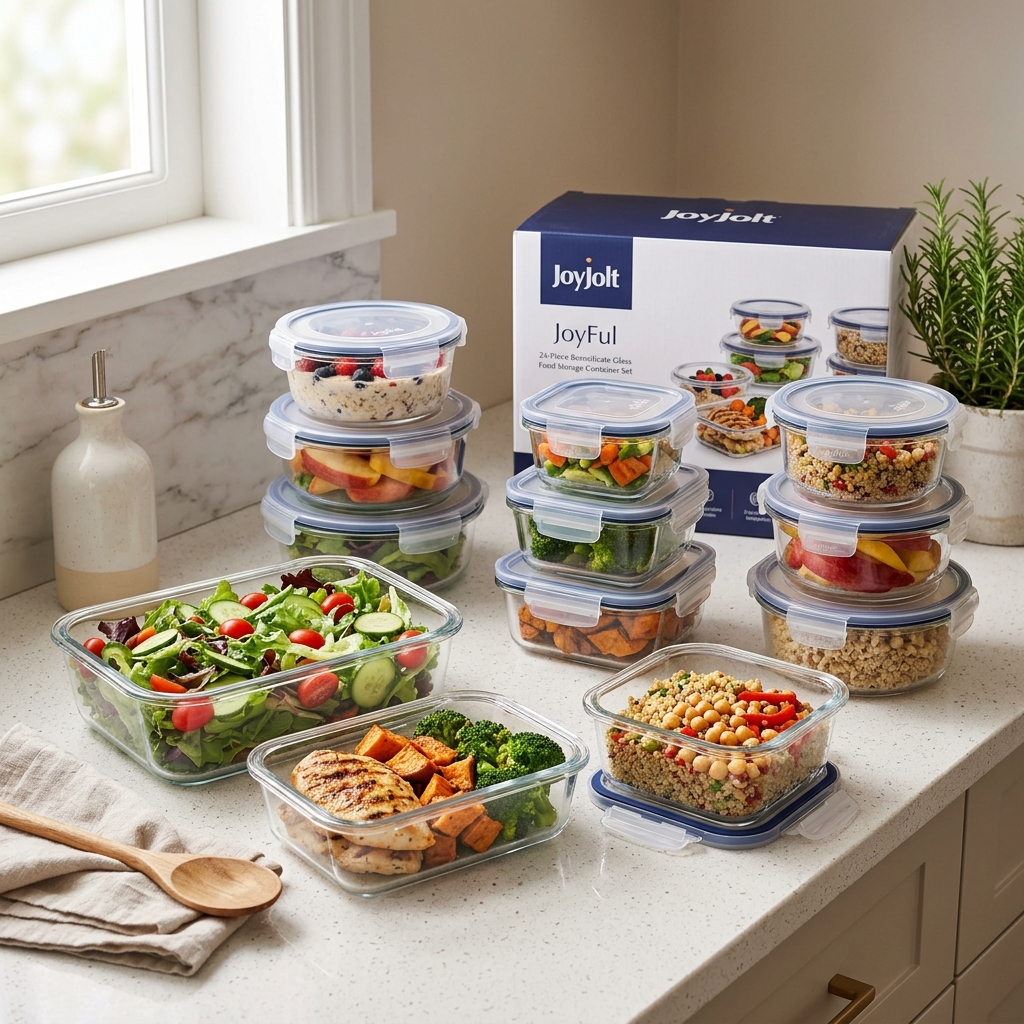
Replace plastic Tupperware with ultra-durable borosilicate glass. JoyJolt JoyFul containers withstand extreme temperatures from oven to freezer without leaching microplastics or chemicals into meal prep.
Pro tip: Add to Cart on Amazon to secure today's sale price!
Thermal Shock Testing: Freezer to 1040°F Oven Transitions
In everyday meal prep, containers frequently undergo rapid temperature swings, such as reheating frozen casseroles or microwaving chilled soups.
Borosilicate glass handles extreme temperature gradients of over 300°F instantly, allowing home cooks to move dishes directly from sub-zero freezers into a preheated 450°F oven without cracking.
Soda-lime glass cannot withstand rapid thermal gradients: when hot liquid hits chilled soda-lime glass, uneven expansion causes sudden, explosive shattering.
To review our laboratory thermal stress tests on kitchen materials, see our Ceramic Cookware Thermal Degradation Test.
Durability Trade-Offs: Impact Resistance, Acid Neutrality & Odor Defense
While borosilicate wins decisively on thermal tolerance, soda-lime glass possesses a slightly denser outer surface that resists minor countertop knocks.
However, both glass types provide 100% non-porous chemical neutrality, resisting acidic tomato sauces, curries, and garlic marinades without absorbing stains or odors.
Sets like JoyJolt JoyFul pair heavy borosilicate glass vessels with airtight silicone snap lids to prevent fridge leaks while eliminating plastic chemical contact with warm foods.
For our full hands-on review of modular container sets, see our JoyJolt JoyFul Glass Container Review.
Pantry Applications: Grain Dispensers vs Fridge Storage
Choosing high-grade borosilicate extends beyond meal prep dishes to countertop grain dispensers.
Borosilicate gravity dispensers keep grains, oats, and rice free from pantry moisture and pest intrusion while providing crystal-clear pantry aesthetics.
For full countertop sizing and setup advice, explore our Glass Rice Dispenser with Bamboo Stand Setup Guide and our Plastic-Free Sunday Meal Prep Workflow Guide.
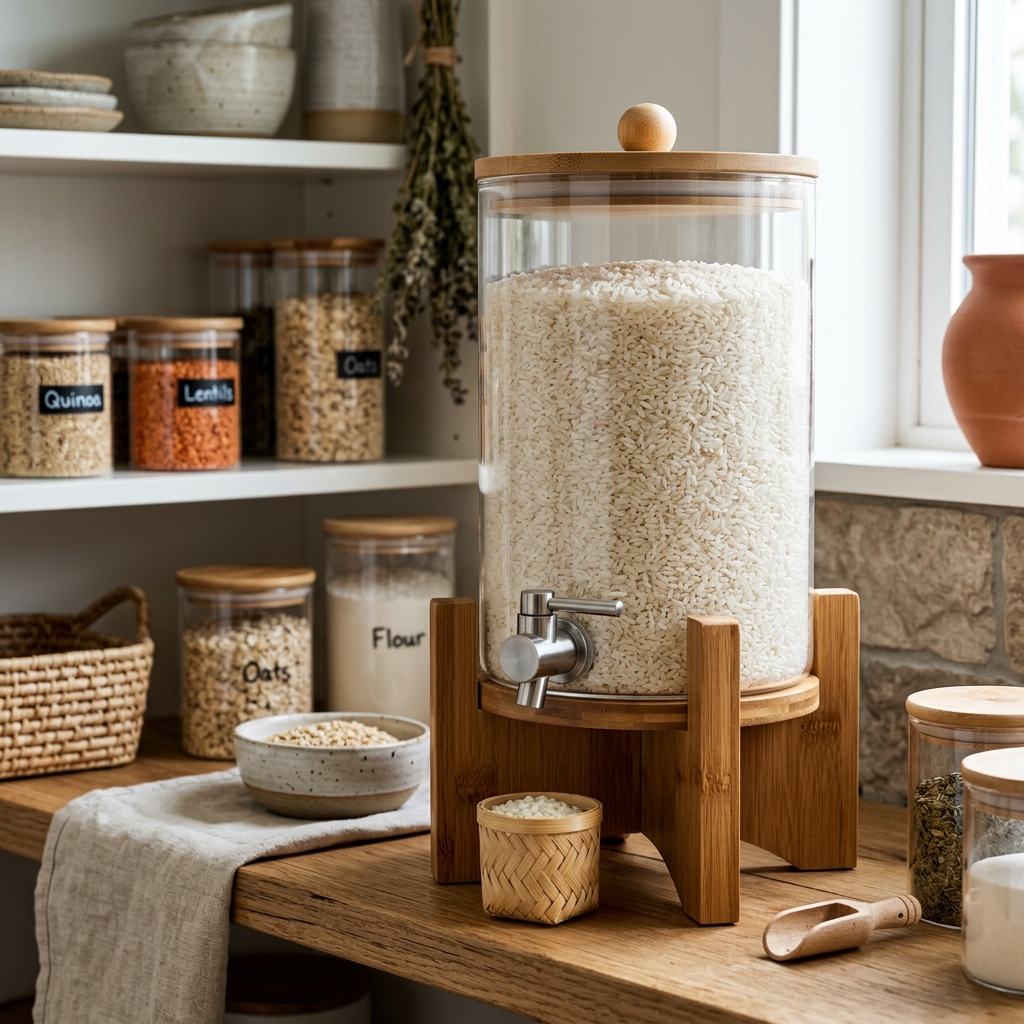
Elevate your open pantry with a heavy-duty borosilicate glass grain dispenser. Features an airtight bamboo lid, solid wooden stand, and bottom stainless steel release valve for easy dispensing of rice, oats, or beans.
Pro tip: Add to Cart on Amazon to secure today's sale price!
Who Is This NOT For?
Skip heavy glass storage vessels if you require featherlight, drop-proof lunchboxes for children or ultralight gear for hiking.
For unbreakable flexible food storage, explore our Best Non-Toxic Baking Sheets & Silicone Guide.
Expert Answers & Material Science Q&A
How can you tell if glass is borosilicate or soda-lime?
Borosilicate glass has a slight grey or clear rim tone, feels lighter in hand, and is clearly labeled as oven safe to 700°F-1040°F. Soda-lime glass often displays a distinct greenish tint on its cut edges.
Why did vintage Pyrex change from borosilicate to soda-lime?
Manufacturers transitioned consumer cookware lines to tempered soda-lime glass in the 1990s to reduce production costs and improve resistance to blunt dropping on kitchen floors.
Can borosilicate glass containers go straight from the freezer to a hot oven?
Yes, high-grade borosilicate glass handles thermal gradients up to 300°F-350°F, allowing direct transitions from freezer storage into preheated baking ovens.
Does soda-lime glass leach harmful chemicals into hot food?
No, soda-lime glass is 100% inert and free of lead, cadmium, and plasticizers. Its primary drawback is thermal shock fragility rather than chemical toxicity.