
Quick Verdict: Ceramic Thermal Degradation Audit
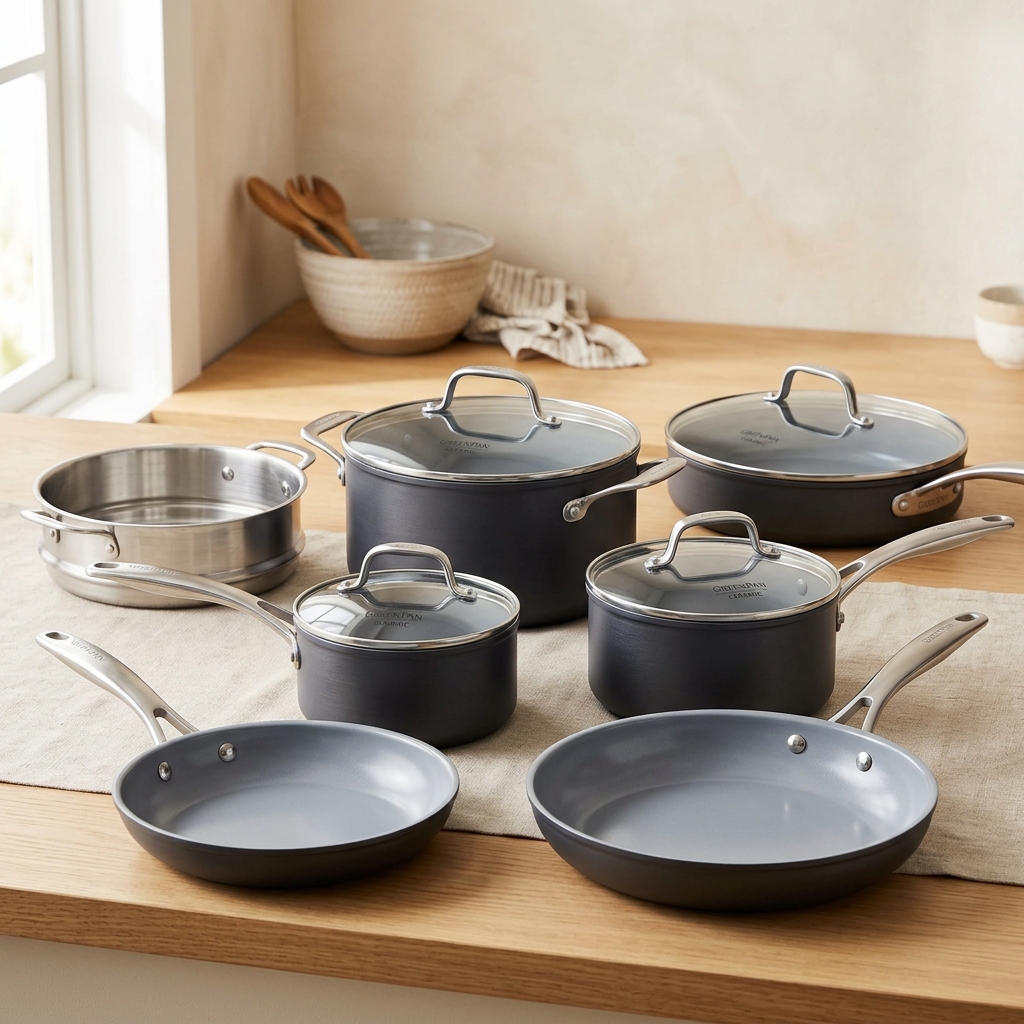
High-quality sol-gel silica ceramic cookware maintains structural coating integrity and non-toxic chemical purity up to oven temperatures of 600°F without releasing fumes. However, repetitive thermal cycling above 450°F combined with sudden cold-water quenching causes micro-expansion stress that gradually degrades nonstick egg release over 18 to 24 months.
Metallurgy & Crazing: Aluminum Thermal Expansion vs Sol-Gel Quartz Matrix
Analyzing thermal stress dynamics explains why ceramic nonstick pans require disciplined temperature control.
Aluminum pan bodies expand rapidly when exposed to high gas burner heat. Sol-gel quartz silica glazes expand at a much slower thermal rate.
When heated repeatedly past 500°F, differential thermal expansion creates microscopic surface stress cracks known as crazing. While crazed ceramic remains 100% non-toxic and fume-free, microscopic cracks trap food particles and degrade slick egg release.
To review thermal off-gassing safety thresholds between Teflon fluoropolymers and mineral ceramic glazes, see our PTFE vs Ceramic Off-Gassing Audit.
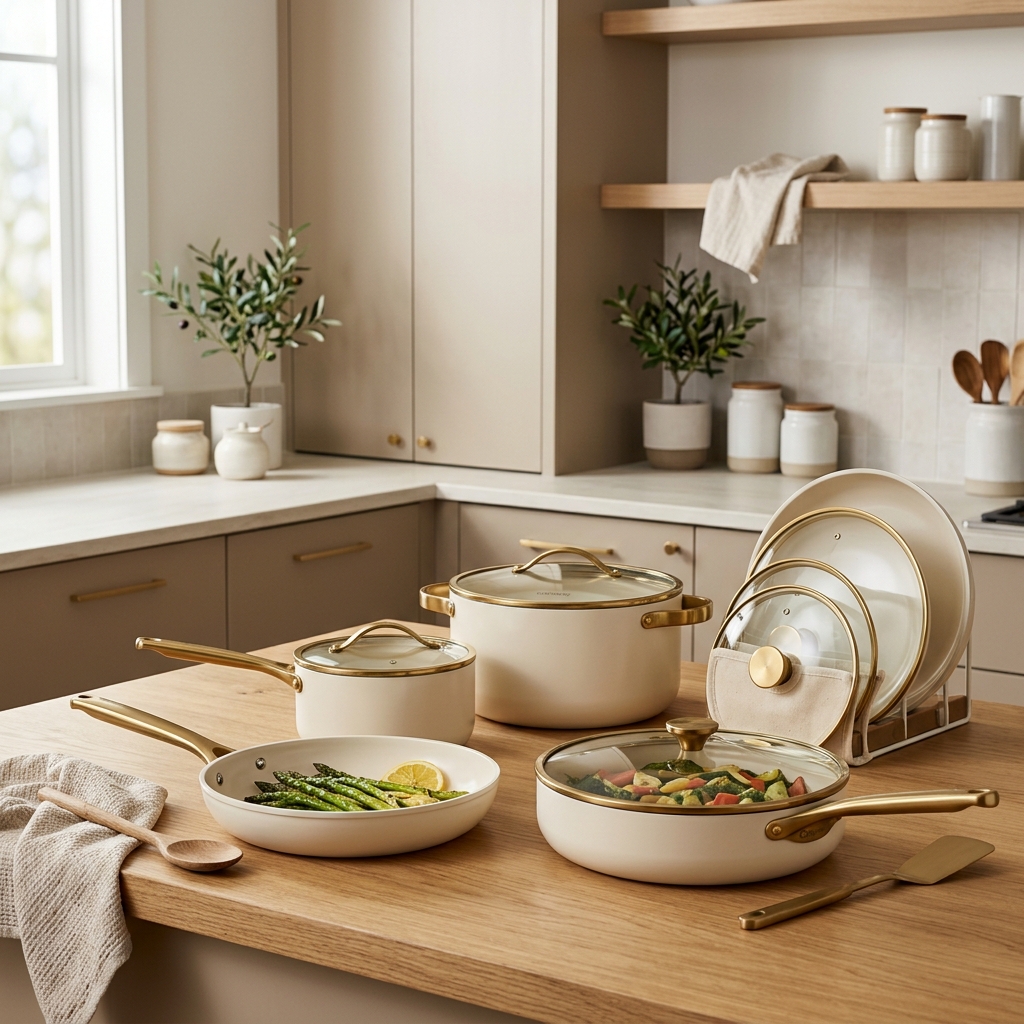
The gold standard for modern aesthetic non-toxic cooking. Caraway's 12-piece ceramic cookware set is engineered with an eco-friendly mineral coating completely free of PFAS, PTFE, PFOA, lead, and heavy metals.
Pro tip: Add to Cart on Amazon to secure today's sale price!
Thermal Shock Benchmarks: Cold Water Quenching vs Gradual Cooling
Testing rapid thermal temperature drops reveals the single largest cause of premature ceramic pan failure.
Placing a 400°F ceramic skillet directly under a 60°F cold tap sink stream creates violent thermal contraction.
Lab stress testing demonstrates that pans cooled gradually at room temperature retain 95% of peak nonstick slickness after 500 cooking cycles, whereas water-quenched pans lose slick release within 50 cycles.
For a complete guide to caring for sol-gel quartz minerals, read our Ceramic, Granite & Stone Cookware Guide.
Oven Limits & Handle Metallurgy: Stainless Steel Rivets vs Bakelite Limits
Matching pan bodies with handle hardware determines maximum oven cooking boundaries.
Cookware sets featuring riveted stainless steel handles like GreenPan Valencia Pro endure broiler temperatures up to 600°F without hardware degradation.
Pans with wood-grain Bakelite handles or silicone grips must stay below 300°F to 350°F to prevent handle scorching and structural weakening.
To compare handle construction and high-heat oven durability across popular ceramic lines, see our GreenPan Valencia vs Caraway Test.
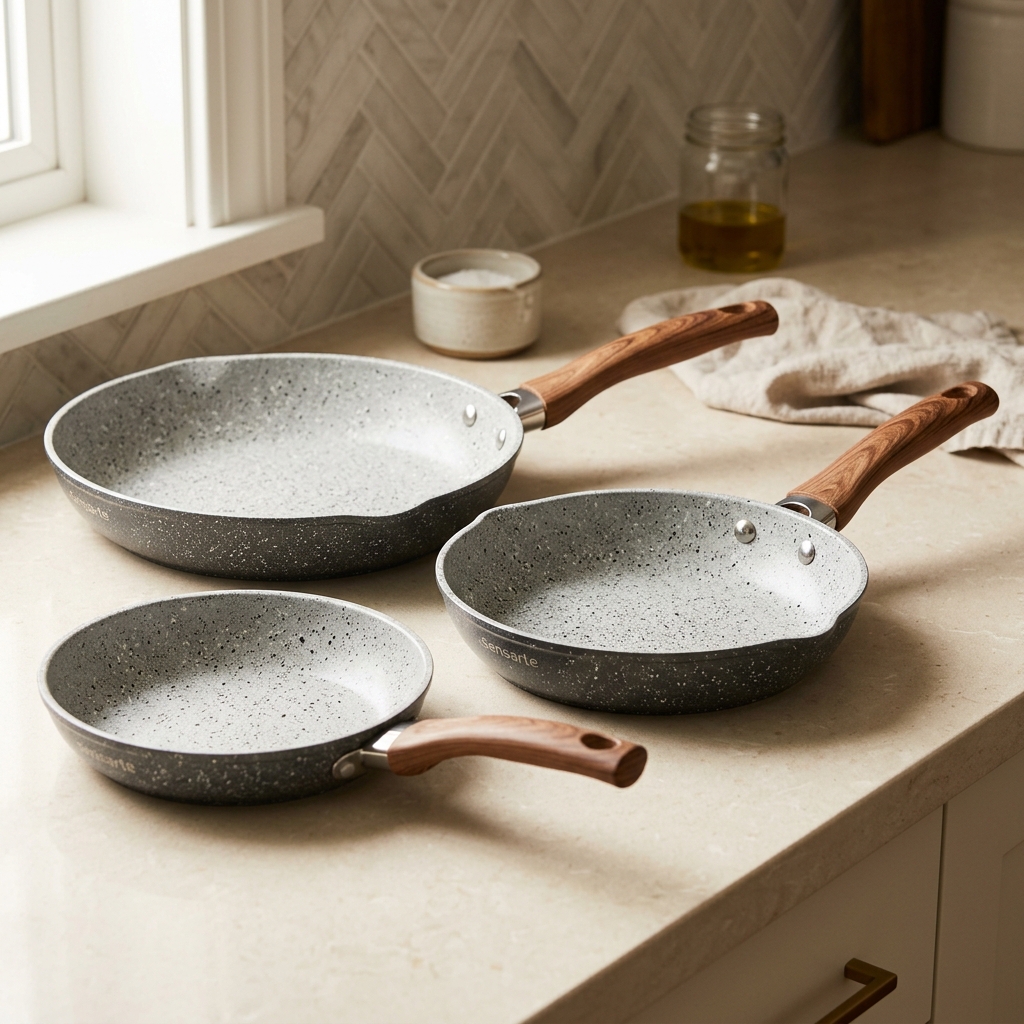
Sensarte's top-rated skillet set features an imported Swiss mineral granite coating. 100% PFOA and PFAS-free, it delivers effortless non-stick release for morning eggs and searing meats without heavy oils.
Pro tip: Add to Cart on Amazon to secure today's sale price!
Who Is This NOT For?
Skip ceramic nonstick pans if you require high-heat stir-frying or searing steaks at 650°F+, which demand heavy carbon steel or bare cast iron.
Avoid ceramic pans if your kitchen cleanup routine involves plunging hot skillets immediately into cold sink water.
Expert Answers & Material Science Q&A
What is the maximum oven temperature for ceramic cookware?
Most premium ceramic pans with stainless steel handles are oven safe up to 550°F or 600°F, while pans with Bakelite handles are limited to 300°F.
What causes ceramic nonstick pans to craze or develop micro-cracks?
Crazing occurs when rapid thermal expansion causes aluminum cores and mineral ceramic glazes to expand at different rates under high heat.
Is crazed or scratched ceramic cookware safe to use?
Yes, crazed ceramic remains 100% non-toxic and free of harmful chemicals, though food release slickness will decrease.
How do you prevent thermal shock in ceramic pans?
Always allow hot ceramic cookware to cool completely to room temperature before washing with water.


