
Quick Verdict: Caraway Ceramic Bakeware vs Silpat Baking Mat
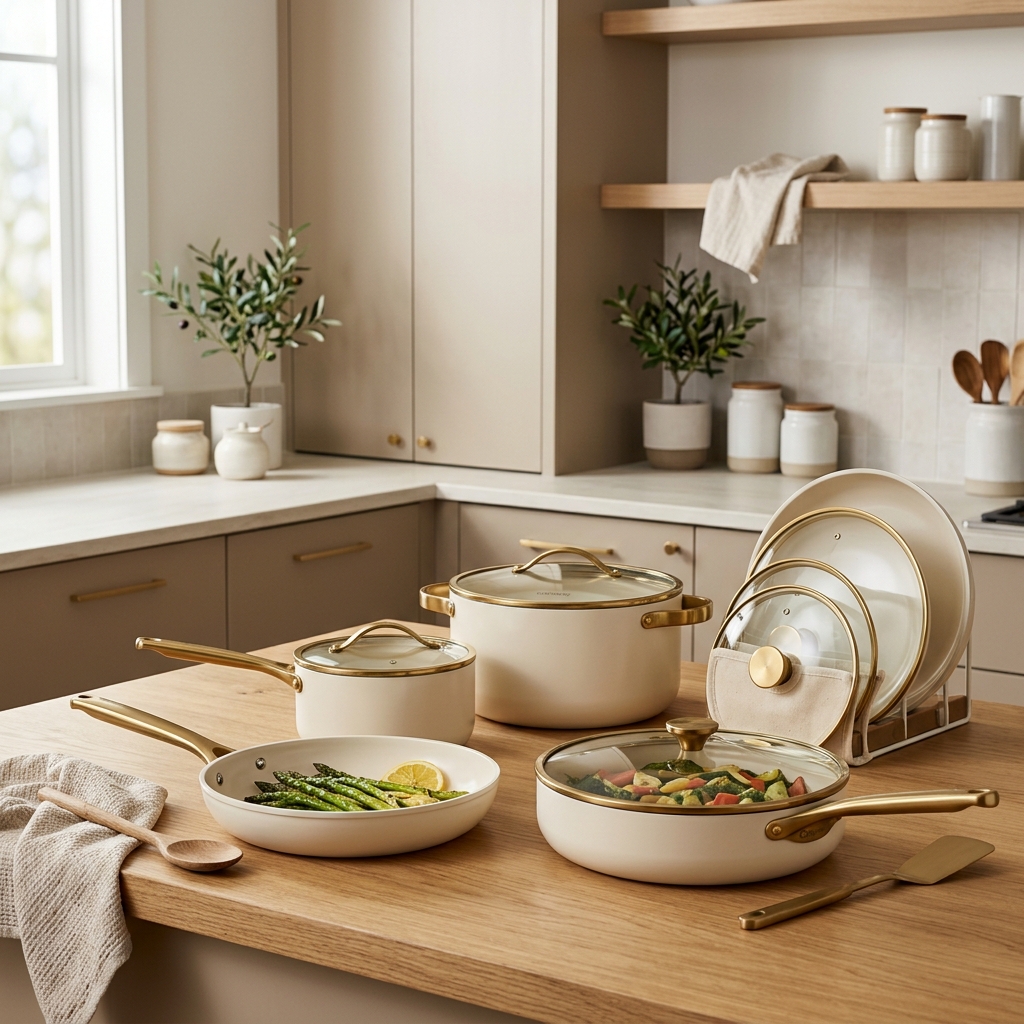
Caraway Ceramic Baking Sheets are superior for roasting vegetables, chicken thighs, and sheet pan dinners requiring rigid structural support and crisp browning up to 550°F. Silpat Platinum Silicone Mats offer superior non-stick release for delicate French macarons, cookies, and sticky sugar pastries up to 500°F without single-use parchment paper, though Silpat requires a underlying metal rimmed baking sheet.
Thermal Conduction & Structural Rigidity: Ceramic Aluminized Steel vs Woven Fiberglass
Oven structural engineering separates these baking icons: Caraway utilizes a heavy-gauge aluminized steel core with reinforced stainless steel rim wire, preventing high-heat oven warping up to 550°F.
Silpat consists of a flexible woven fiberglass mesh encapsulated in food-grade platinum silicone, distributing radiant oven heat evenly across cookies while requiring a underlying metal sheet pan for structural support.
Choose Caraway if you demand a rigid standalone sheet pan for high-heat roasting. Choose Silpat if you bake delicate cookies and want zero parchment paper waste.
To see how sol-gel ceramic mineral glazes endure high oven heat and differential expansion without thermal degradation, see our Ceramic Cookware Thermal Degradation Test.
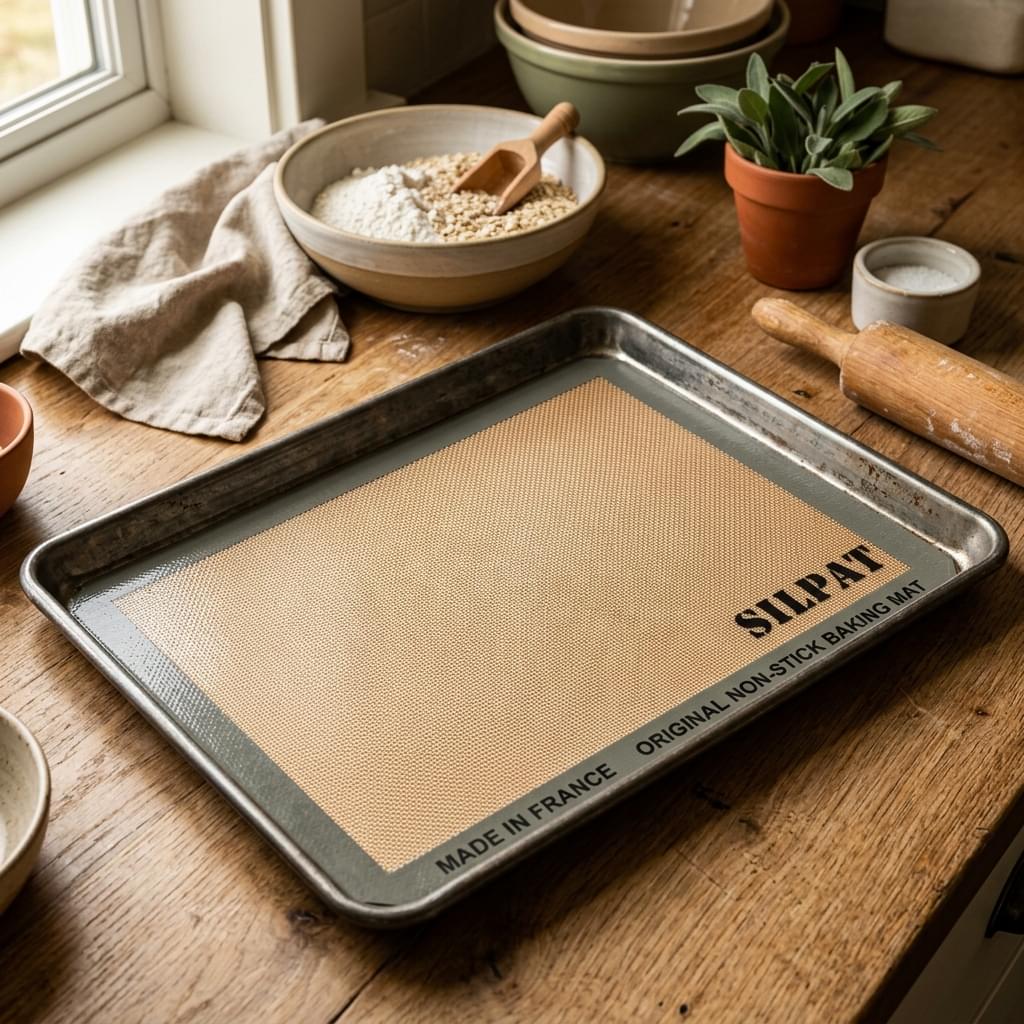
The original French pastry chef standard. Constructed from food-grade platinum silicone reinforced with a woven fiberglass mesh core for perfectly uniform heat conduction.
Pro tip: Add to Cart on Amazon to secure today's sale price!
Coating Metallurgy & Non-Toxic Purity: Mineral Sol-Gel Ceramic vs Platinum Vulcanized Silicone
Non-toxic safety evaluation: Both products are 100% free of PTFE (Teflon), PFOA, PFOS, lead, and cadmium, ensuring zero toxic fume off-gassing at high oven temperatures.
Caraway uses a natural mineral sol-gel ceramic glaze bonded to aluminized steel, whereas Silpat utilizes French platinum-cured silicone reinforced with inert fiberglass thread.
For a complete safety breakdown on non-toxic mineral glazes versus fluoropolymer coatings at high baking temperatures, read our PTFE vs Ceramic Off-Gassing Audit.
Cleaning Ergonomics & Lifetime Care: Hand Wash Care vs Dishwasher Avoidance
Care and cleaning dynamics: Both non-toxic baking surfaces require hand washing with warm soapy water and soft sponges.
Avoid using metal spatulas or serrated knives on either surface, as sharp metal edges can slice Silpat silicone skin or scratch Caraway's smooth ceramic glaze.
If your ceramic baking sheets accumulate burnt oil stains after heavy roasting, follow our step-by-step guide on How to Restore a Ceramic Nonstick Pan.
Who Is This NOT For?
Skip Silpat silicone mats if you want an all-in-one standalone baking sheet, as flexible silicone mats collapse without a rigid underlying metal pan.
Avoid Caraway ceramic bakeware if you insist on using metal spatulas or washing baking sheets in automatic dishwashers, as harsh detergent salts degrade ceramic nonstick slickness.
Expert Answers & Material Science Q&A
Can you use a Silpat baking mat without a baking sheet under it?
No, Silpat mats are flexible woven silicone and must be placed on top of a rigid metal baking sheet or pan.
Is Caraway bakeware safe up to 550°F in the oven?
Yes, Caraway ceramic-coated aluminized steel bakeware is oven safe up to 550°F without warping.
Does Silpat replace parchment paper for baking cookies?
Yes, Silpat silicone mats replace single-use parchment paper, providing effortless non-stick release for thousands of baking cycles.
Can you cut food directly on a Silpat mat or Caraway pan?
No, never use knives or serrated tools directly on ceramic glazes or silicone mats to prevent scratching or slicing the non-stick surface.


