Quick Verdict: The Non-Toxic Wok Seasoning Protocol
Seasoning raw carbon steel requires scrubbing away factory anti-rust oils, heat-blueing the bare metal over high flame at 600°F, and building micro-thin layers of polymerized grapeseed or avocado oil. This natural process creates a glass-smooth nonstick patina without synthetic PTFE, chemicals, or PFAS toxins.
Metallurgy Basics: Why Raw Carbon Steel Needs Heat Blueing
Raw carbon steel is an alloy of iron and carbon that reacts immediately with moisture and oxygen in the air, causing surface oxidation and rust.
Heating bare carbon steel to approximately 600°F transforms iron into black iron oxide (magnetite), creating a corrosion-resistant protective foundation.
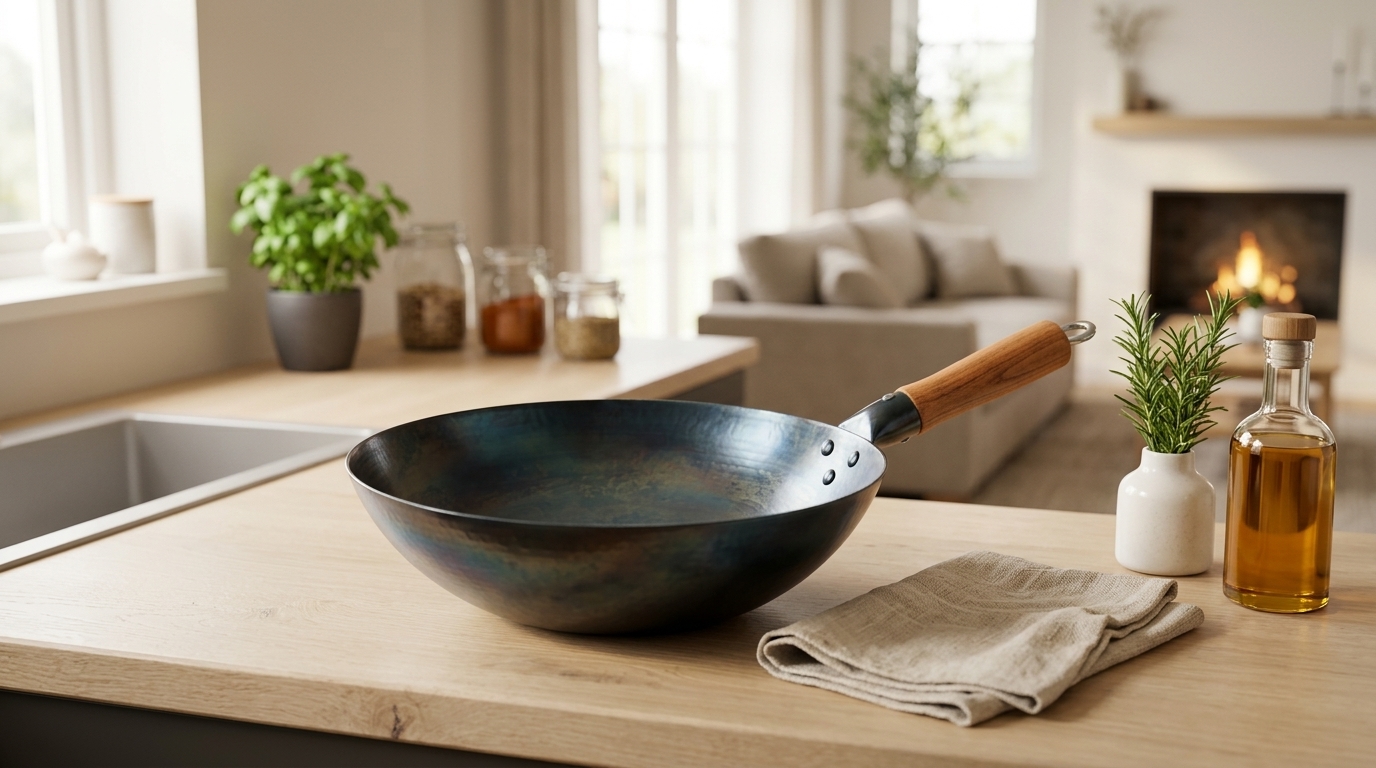
This thermal transformation produces a visible shift from shiny silver to deep gunmetal blue, a process professional chefs call blueing.
Once blued, microscopic pores in the metal expand and bind with cooking oils through polymerization, creating a slick non-toxic cooking surface.
For technical data on iron alloy stability, explore our Heirloom Carbon Steel Guide.
Oil Selection: Best High-Smoke Point Oils vs Toxic Aerosols
Selecting the right oil is critical for building a durable polymer layer that will not flake or turn gummy under high stir-fry temperatures.
Pure unrefined grapeseed oil (smoke point 420°F) and refined avocado oil (smoke point 520°F) are the gold standards for non-toxic seasoning.
These natural fats contain optimal ratios of unsaturated fatty acids that cross-link into a resilient, hard finish under intense heat.
Avoid commercial nonstick cooking sprays, which contain propellant gases, lecithin additives, and synthetic emulsifiers that scorch and leave sticky residue.
To learn how synthetic coatings compare against mineral surfaces, check our PTFE vs Ceramic Off-Gassing Audit.
Step-by-Step Tutorial: From Raw Silver to Black Nonstick Patina
Follow this four-phase workshop procedure to properly blue and season your new carbon steel wok:
Phase 1: Scrub the raw wok vigorously inside and out with hot water, mild dish soap, and a scouring pad to remove factory transit grease, then wipe completely dry.
Phase 2: Place the dry wok over maximum burner heat, rotating the sides across the flame until the entire bowl turns from silver to a dark iridescent blue.
Phase 3: Turn off the heat, allow the metal to cool for two minutes, and apply a quarter-teaspoon of grapeseed oil using a folded lint-free cotton cloth.
Phase 4: Buff the oil so thoroughly that the metal appears almost dry, then reheat over medium-high until the oil smokes gently and bonds to the steel.
Repeat Phases 3 and 4 three times to establish a reliable foundation before your first stir-fry session.
Post-Cook Maintenance: How to Clean Without Stripping Your Seasoning
Never wash seasoned carbon steel cookware with harsh detergents, green abrasive scouring pads, or automatic dishwashers.
After cooking, rinse the warm pan under hot tap water and gently loosen food particles using a natural bamboo wok brush or soft sponge.
Dry the wok thoroughly over a low burner flame for 60 seconds to evaporate all surface moisture.
Wipe a single drop of cooking oil across the interior while still warm to shield the metal from humidity until your next meal.
For proper care techniques across removable modular handles, see our Detachable Handle Cookware Care Guide.
Who Is This NOT For?
Raw carbon steel woks are not suitable for cooks looking for zero-maintenance dishwasher-safe convenience; for dishwasher-safe sets, explore our CAROTE vs GreenPan Comparison.
They are not recommended for simmering acidic tomato sauces or vinegar-heavy braises, which dissolve thin polymerized oil layers.
Cooks with standard low-power flat radiant electric stoves may struggle with round-bottom woks; see our Space Saving Cookware Sets Guide for flat-base alternatives.
For chemical safety verification across mineral nonstick options, review Is Granite Cookware Safe?.
The Buying Verdict: Best Carbon Steel Woks for Home Kitchens
Yosukata 14-Inch Pre-Seasoned Flat-Bottom Wok is our top pick for home cooks, featuring factory heat-treatment that cuts initial prep time in half.
Craft Wok Traditional Hand-Hammered Wok delivers heirloom durability for gas burners, offering authentic heavy-gauge steel for intense wok hei tossing.
Properly seasoned carbon steel provides a lifetime of non-toxic, chemical-free cooking that improves with every single meal you make.
Expert Answers & Material Science Q&A
What is the best oil to season a carbon steel wok?
Pure grapeseed oil and refined avocado oil are best because of their high smoke points and fatty acid profiles that cross-link into a smooth, durable patina.
Why did my carbon steel wok turn black after seasoning?
A dark blue or black color is the intended outcome of heat blueing and oil polymerization, indicating a strong, rust-resistant nonstick layer.
How do you fix a carbon steel wok if food starts sticking?
Scrub away carbonized food with hot water and coarse salt, dry thoroughly over medium heat, and apply a fresh micro-layer of oil over high heat.
Can I use soap to clean a seasoned carbon steel wok?
A drop of mild dish soap will not damage a fully polymerized oil patina, but harsh alkaline detergents and dishwasher tablets must be avoided.