
Quick Verdict: Is Granite Cookware Safe?
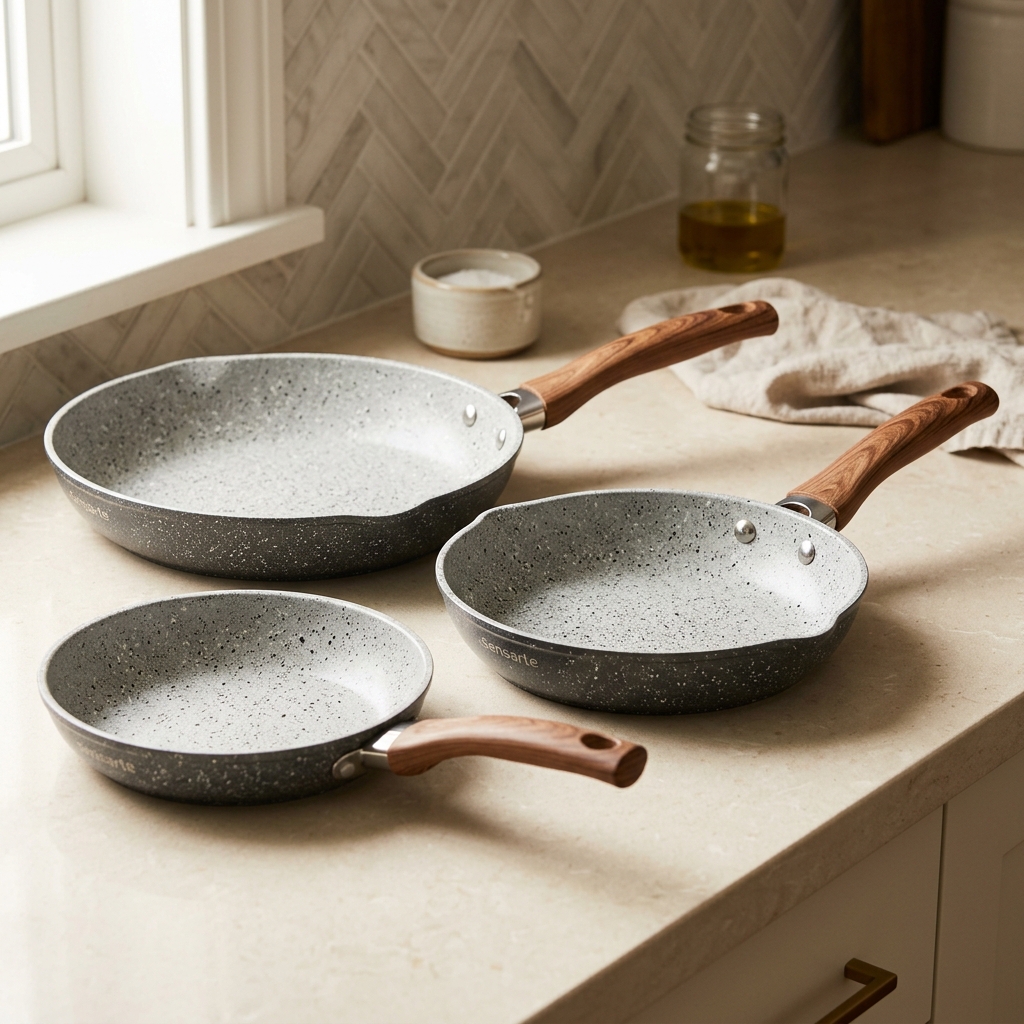
Granite cookware is safe for daily home cooking when certified free of PFOA, lead, and cadmium. Granite pans do not contain real stone slabs; they use die-cast aluminum coated with a mineral-infused ceramic or reinforced nonstick matrix that remains chemically inert under 450°F.
The Granite Myth: What Are Granite Pans Actually Made Of?
Despite aggressive marketing imagery suggesting pans carved from solid mountain granite, granite cookware contains no structural rock slabs.
The cookware core consists of lightweight die-cast aluminum or carbon steel designed for rapid thermal conductivity.
Manufacturers spray this metal core with an enamel or ceramic nonstick layer embedded with microscopic mineral flakes, giving the surface its distinctive speckled granite appearance.
These mineral particles increase structural surface hardness, improving resistance to micro-scuffs compared to plain soft nonstick coatings.
To learn more about mineral classifications, explore our guide on Ceramic, Granite & Stone Cookware Explained.
Chemical Breakdown: The Difference Between PFOA-Free and PTFE-Free
One common source of consumer confusion is the difference between PFOA-free marketing and truly PTFE-free mineral coatings.
PFOA was banned globally under the Stockholm Convention, meaning virtually all modern cookware is legitimately PFOA-free.
Some budget granite pans still use a PTFE fluoropolymer base reinforced with mineral flecks, while others use pure silica sol-gel mineral ceramic.
Pure mineral ceramic granite pans, such as those from CAROTE and Sensarte, emit zero chemical fumes or polymer degradation byproducts even if accidental overheating occurs.
For laboratory test data on fluoropolymer breakdown, see our PTFE vs Ceramic Off-Gassing Audit.
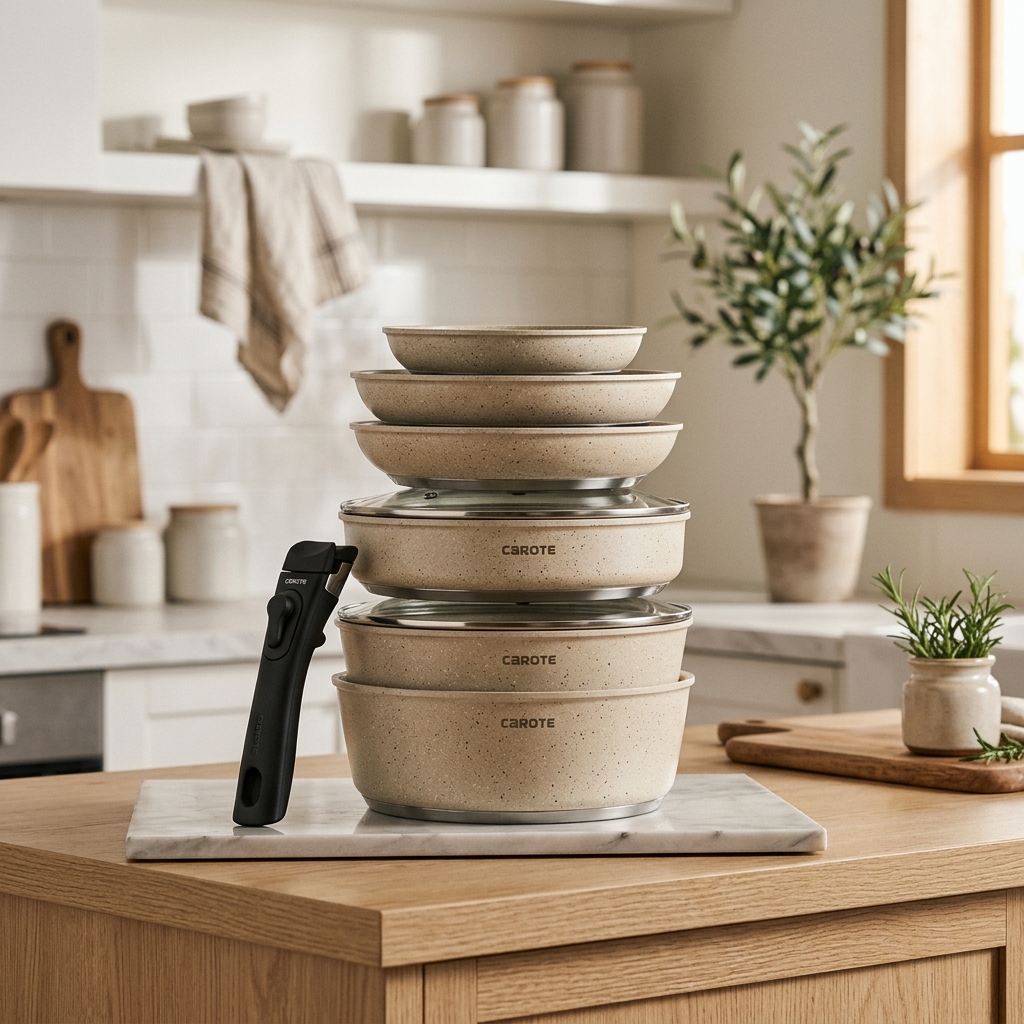
Engineered for modern small-space kitchens. The secure click-off handle transforms pans into baking dishes, serving platters, or fridge storage containers in seconds while saving up to 70% cabinet space.
Pro tip: Add to Cart on Amazon to secure today's sale price!
Thermal Ceilings: Safe Cooking Temperatures & Heat Management
Operating granite cookware within safe temperature boundaries is essential for maintaining non-toxic food contact.
Mineral ceramic granite surfaces remain chemically stable up to 500°F, which easily accommodates standard egg frying, pancake cooking, and vegetable sautéing.
Exceeding 500°F through dry preheating can cause microscopic thermal shock, leading to micro-fissures in the mineral glaze that degrade food release.
Using medium to low burner settings ensures even heat migration without stressing the aluminum core or bonded induction plate.
To understand how rapid temperature shifts degrade mineral coatings, review our Ceramic Cookware Thermal Degradation Test.
Surface Care: Protecting Mineral Glazes from Flaking & Leaching
The mineral flecks in granite cookware provide moderate scratch resistance, but abrasive scrubbing can still wear down the protective sealant.
Metal spatulas, steel wool pads, and harsh powdered cleansers can create micro-grooves that trap burnt fats and cooking oils.
Washing pans by hand with a soft cellulose sponge and gentle dish soap preserves the mineral slickness for years of daily use.
Dishwasher detergents contain concentrated alkaline salts that slowly etch away mineral ceramic finishes over repeated cycles.
For a proven method to restore dull or sticking mineral coatings, follow How to Restore a Ceramic Nonstick Pan.
Who Is This NOT For?
Granite cookware is not suitable for home cooks who need high-heat searing for thick steaks or outdoor campfire cooking.
Cooks who insist on running all cookware through the high-heat sanitize cycle of a dishwasher should look into stainless steel.
It is also not intended for metal utensils, hand mixers, or immersion blenders that come into direct contact with the pan bottom.
For searing meats at intense heat with zero coatings, consider an unseasoned heirloom alternative from our Heirloom Carbon Steel Guide.
The Safety Verdict: Top Safe Non-Toxic Granite Recommendations
When sourced from reputable manufacturers providing third-party food contact certification (FDA and California Prop 65 compliance), granite cookware is safe, non-toxic, and user-friendly.
For everyday budget-friendly skillet cooking with dual pour spouts, Sensarte Swiss granite skillets offer dependable non-toxic performance under $45.
For small kitchens and modular cabinet organization, CAROTE detachable granite sets provide complete nesting with zero chemical off-gassing.
To see how CAROTE compares to premium hard-anodized ceramic, read our complete CAROTE vs GreenPan Comparison.
Expert Answers & Material Science Q&A
Is granite cookware made from real granite stone?
No. Granite cookware is made from an aluminum or carbon steel core coated with a mineral-infused nonstick ceramic layer that features a speckled stone appearance.
Does granite cookware contain lead or cadmium?
Reputable non-toxic granite cookware brands undergo California Prop 65 testing to certify zero lead, cadmium, or heavy metal contamination.
Can granite cookware go in the oven?
Most granite pan bodies are oven safe up to 450°F to 480°F. However, Bakelite handles or detachable handles must be removed before oven use.
What should I do if my granite pan gets scratched?
Minor superficial scuffs do not release toxins on certified non-toxic ceramic pans, but deep gouges exposing the raw aluminum core warrant replacing the pan.


