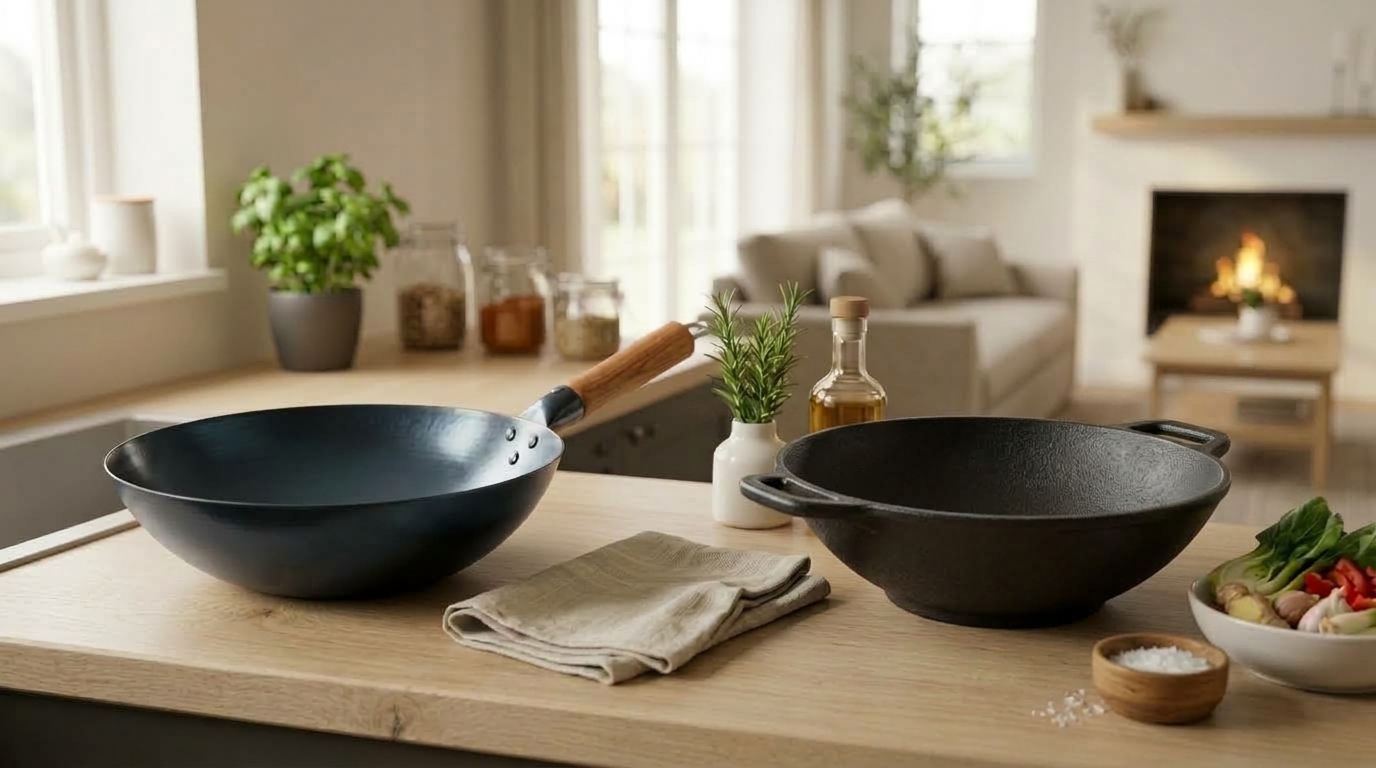
Quick Verdict: Cast Iron vs Carbon Steel Woks
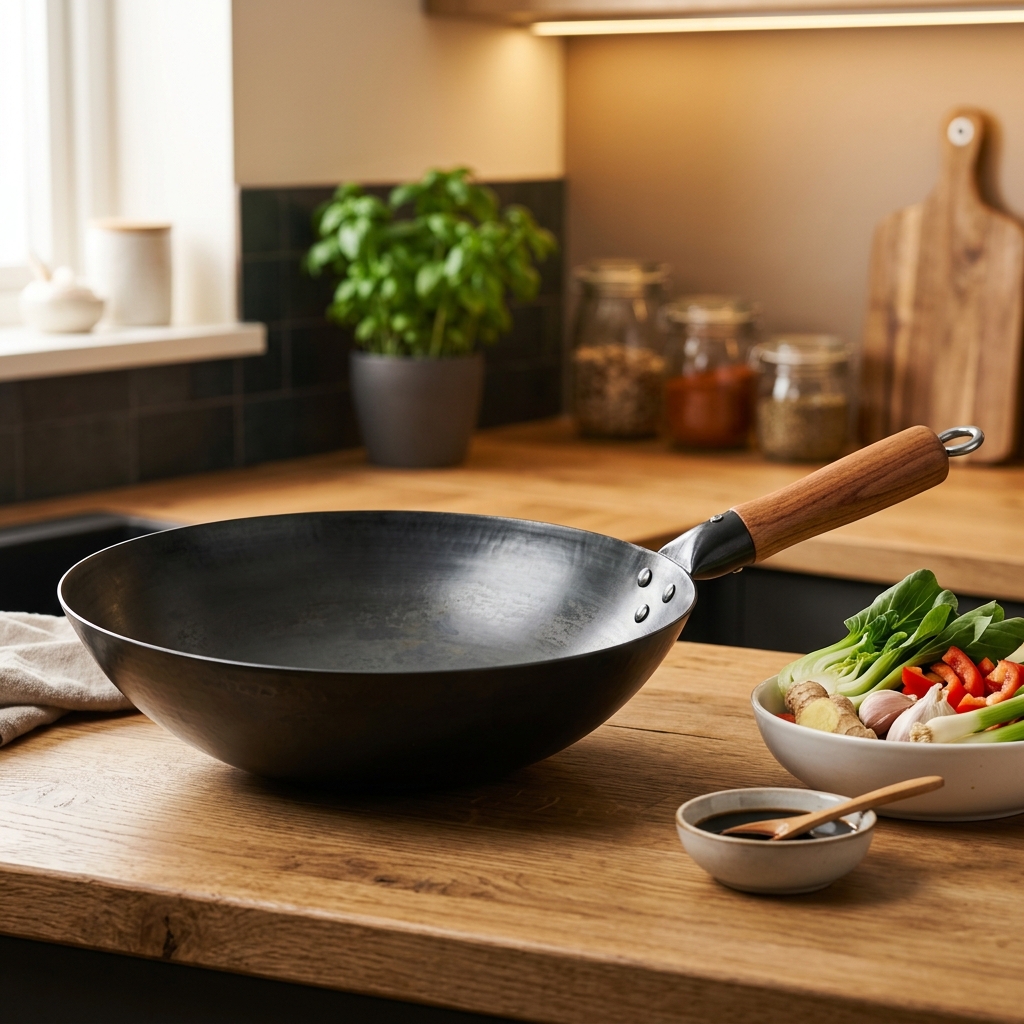
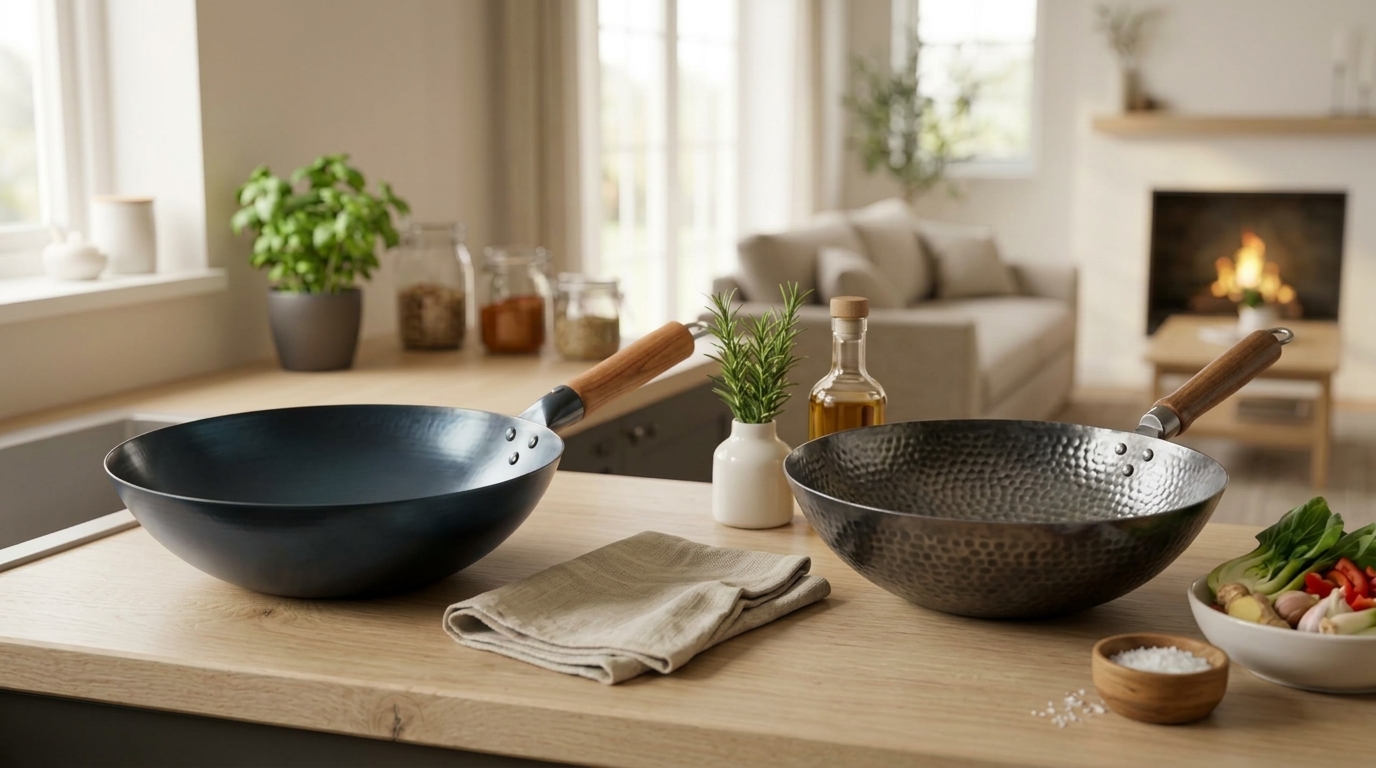
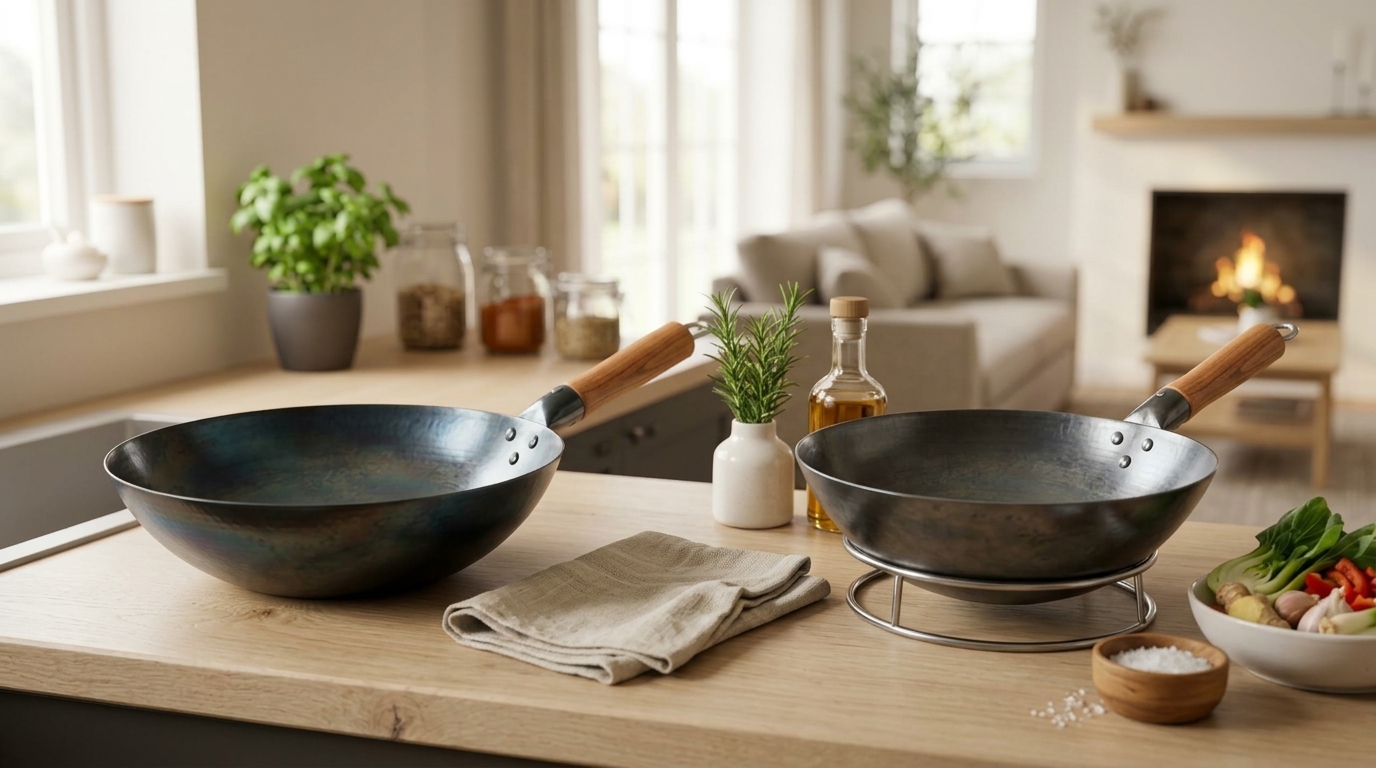
Carbon steel woks are the clear winner for fast-action stir-frying, offering rapid temperature response and a lightweight 3.8-pound body for easy tossing. Cast iron woks excel at high-mass heat retention for deep frying, braising, and low-power electric stoves that struggle to maintain temperature.
Thermal Dynamics: Heat Retention vs Rapid Flame Responsiveness
The fundamental difference between cast iron and carbon steel lies in their thermal mass and crystal grain structure.
Cast iron contains 2% to 4% carbon, creating a thick, heavy pan wall that absorbs massive amounts of heat energy.
When cold raw ingredients hit cast iron, the pan temperature barely drops, preventing unwanted food steaming during stir-fries.
Carbon steel contains roughly 1% carbon and is rolled thin (1.5mm to 2mm), allowing it to heat up or cool down instantly when you adjust the burner flame.
This dynamic response gives home cooks precise control over delicate garlic, scallions, and glazes without burning.
For testing data on iron alloy stability, explore our Heirloom Carbon Steel Guide.
Ergonomics & Agility: 3.8 lbs Wok Tossing vs 10 lbs Stationary Cooking
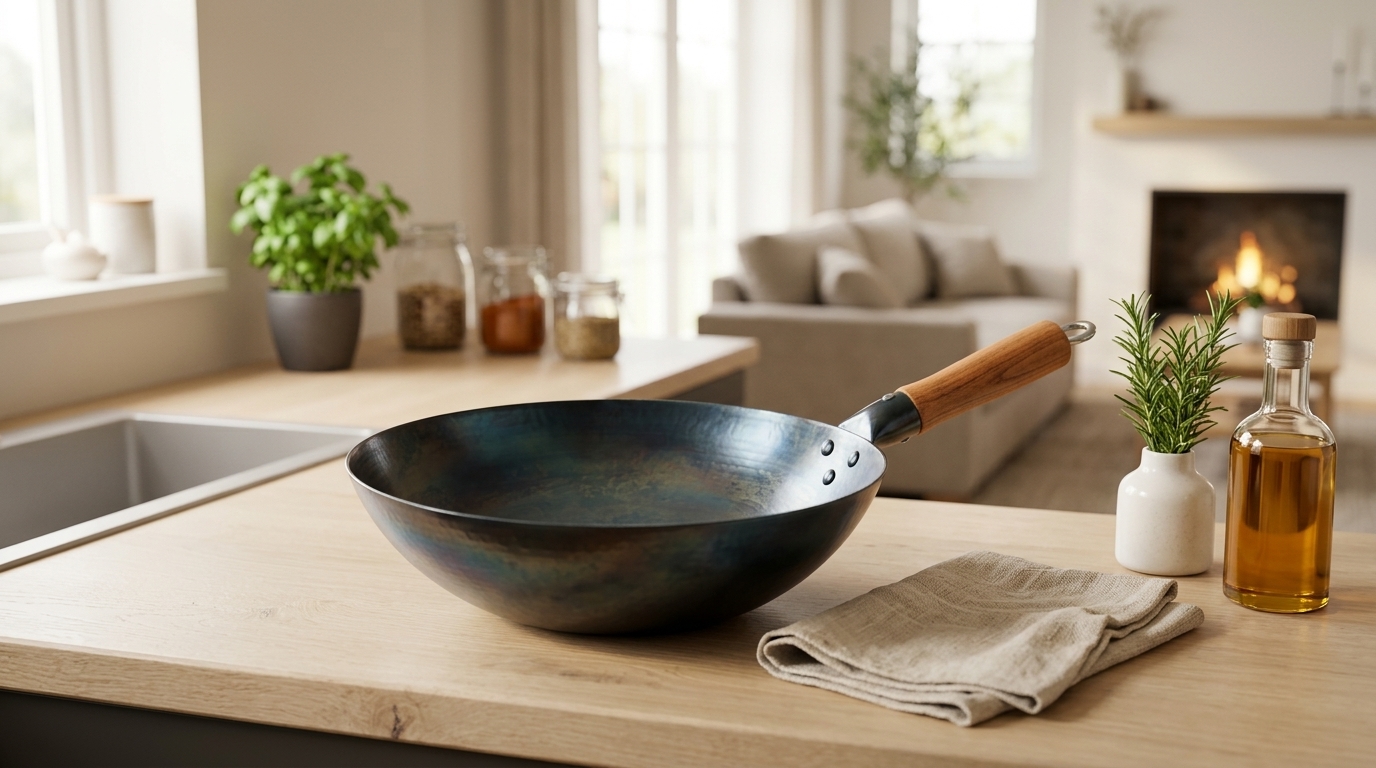
A traditional 14-inch carbon steel wok weighs between 3.5 and 4.2 pounds, allowing fluid one-handed tossing to aerate ingredients through hot rising steam.
A comparable 14-inch cast iron wok weighs between 8.5 and 11 pounds, making single-handed lifting virtually impossible for home cooks.
Cast iron woks function as stationary vessels where food must be stirred using spatulas and ladles rather than tossed in the air.
For home cooks preparing quick weeknight dinners, carbon steel dramatically reduces wrist strain and kitchen fatigue.
To compare specific models, read our Yosukata vs Craft Wok Comparison.
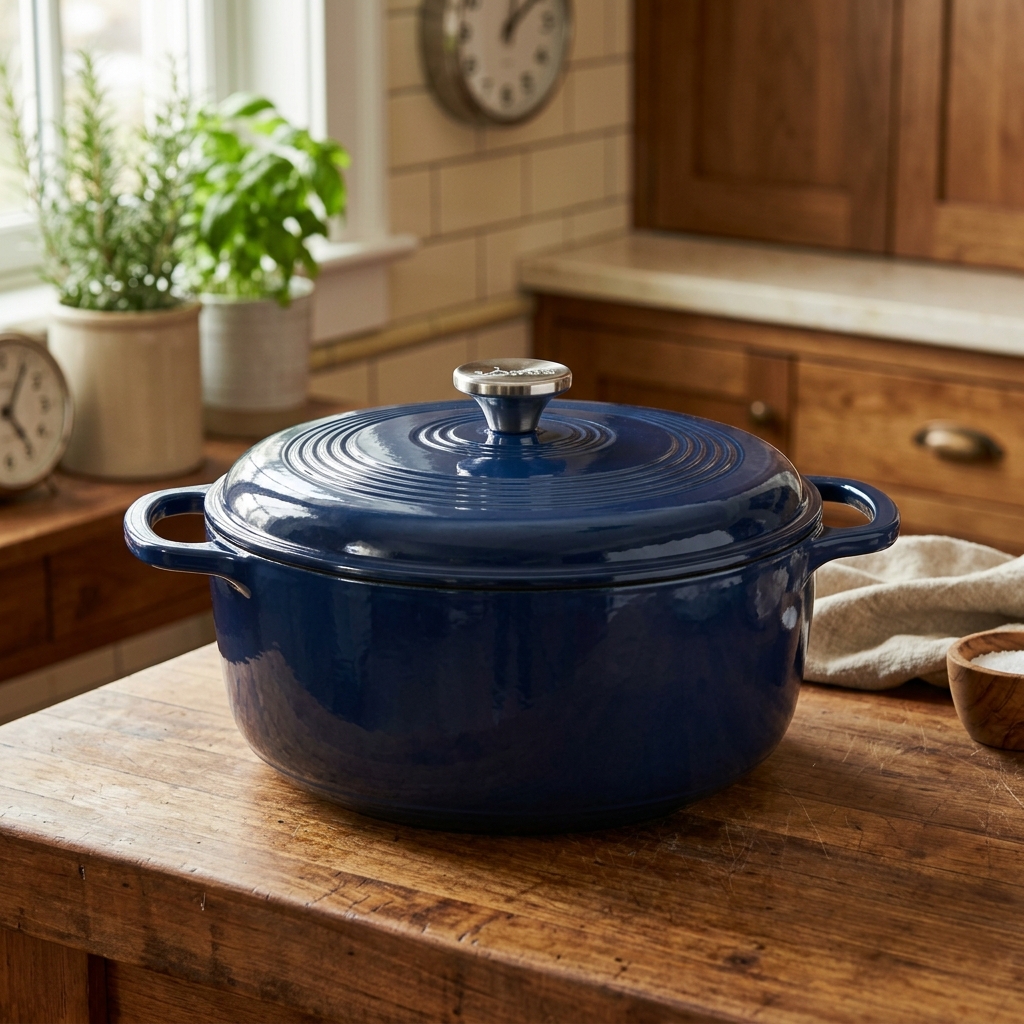
An American kitchen staple. Heavy cast iron coated in smooth porcelain enamel eliminates the need for chemical non-stick while offering superior heat distribution for slow-simmered stews, roasts, and sourdough bread.
Stovetop Matching: High-BTU Gas vs Electric & Induction Burners
Your cooktop type plays a massive role in determining which wok material delivers better culinary results.
On high-power gas ranges, carbon steel takes full advantage of direct flame contact to produce authentic restaurant wok hei.
On standard electric coil or glass-top radiant stoves with low wattage, cast iron massive heat storage compensates for slow burner recovery.
On induction cooktops, both materials couple efficiently, but flat-bottom carbon steel provides the best balance of speed and control.
For details on induction coupling physics, review our Flat Bottom vs Round Bottom Wok Guide.
Patina Chemistry: Microscopic Porosity and Nonstick Slickness
Both cast iron and carbon steel form a naturally non-toxic, nonstick cooking surface through oil polymerization.
Cast iron rough pebbled texture holds initial seasoning layers tightly, creating a rugged protective crust.
Carbon steel smooth spun surface builds a slicker, glass-like patina that offers superior release for delicate fried eggs and starch noodles.
Neither material contains synthetic PTFE, chemicals, or PFAS toxins, ensuring 100% safe cooking for your family.
To learn how to blue and season carbon steel properly, follow our Non-Toxic Carbon Steel Wok Seasoning Guide.
Who Is This NOT For?
Neither wok is suitable for cooks seeking dishwasher-safe convenience; for dishwasher-safe sets, explore our CAROTE vs GreenPan Comparison and CAROTE vs Sensarte Comparison.
Cast iron woks are not recommended for elderly cooks or anyone with wrist arthritis due to heavy 10-pound lifting requirements.
For compact studio apartments with limited cabinet clearance, explore our Space Saving Cookware Sets Guide.
For chemical safety verification across nonstick cookware surfaces, review our PTFE vs Ceramic Off-Gassing Audit.
The Buying Verdict: Which Wok Material Is Right for You?
Choose a carbon steel wok if you want authentic stir-fry tossing agility, rapid flame control, and lightweight weeknight versatility.
Choose a cast iron wok if you prioritize heavy heat retention for braising, deep frying, or cooking on low-output electric coils.
Both heirloom metals provide chemical-free, non-toxic cooking that improves with every meal and lasts for generations.
Expert Answers & Material Science Q&A
Is cast iron or carbon steel better for a wok?
Carbon steel is better for traditional stir-frying because it is light enough to toss and responds instantly to heat changes on the burner.
Does cast iron get hotter than carbon steel?
Both reach the same maximum temperatures, but cast iron holds significantly more heat energy, preventing temperature drops when cold food is added.
Which wok is easier to maintain and clean?
Both follow the same maintenance routine: wash with hot water, dry completely over low stovetop heat, and wipe with a light drop of oil.
Can I use metal utensils in cast iron and carbon steel woks?
Yes. Both metals are durable and scratch-resistant, allowing you to use stainless steel wok spatulas and ladles without damaging the pan.