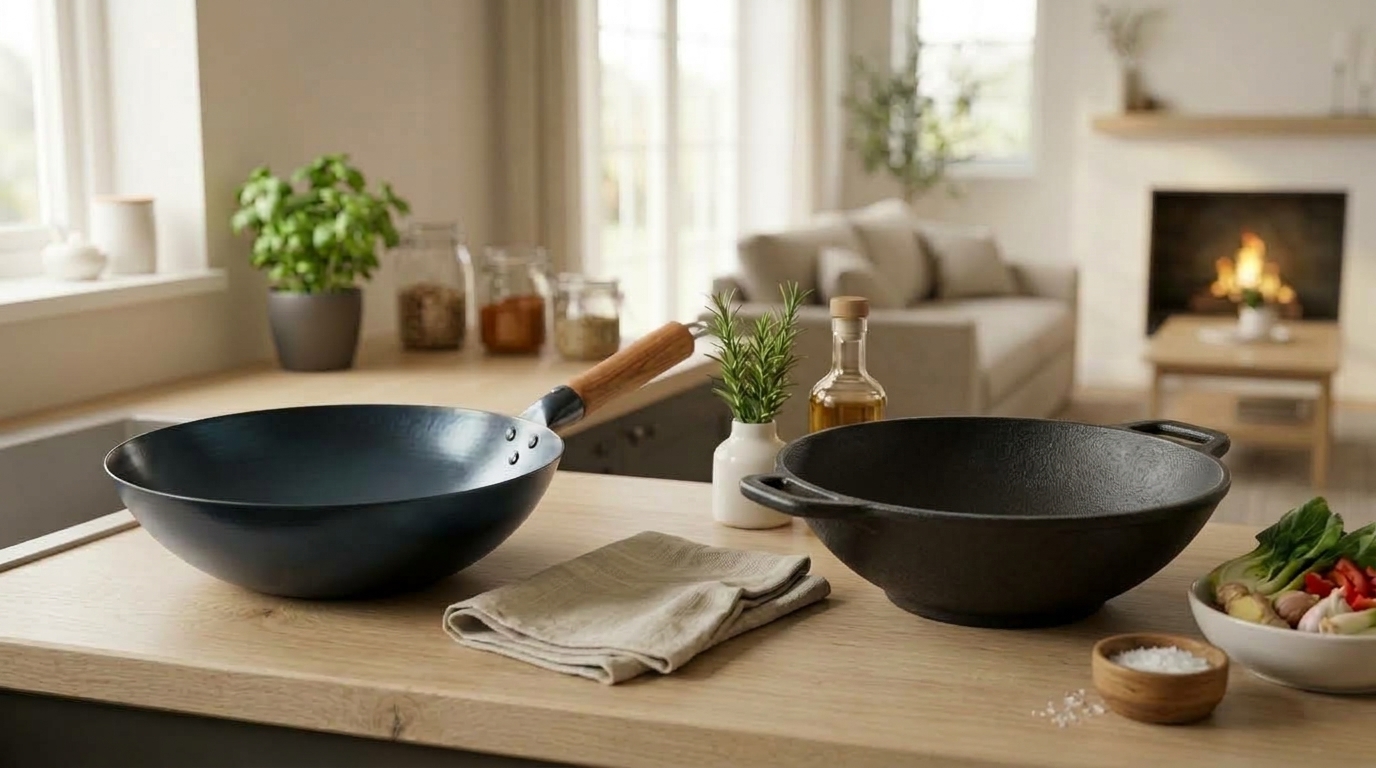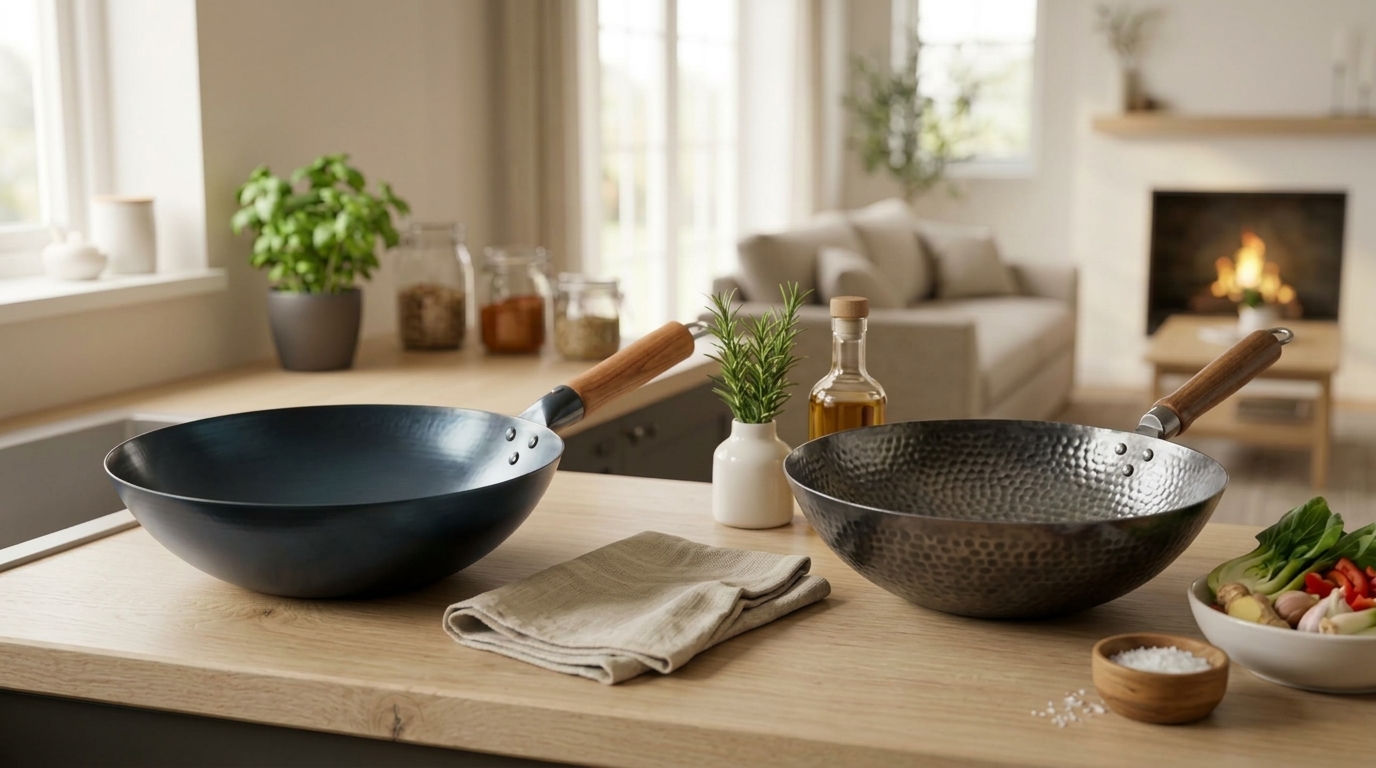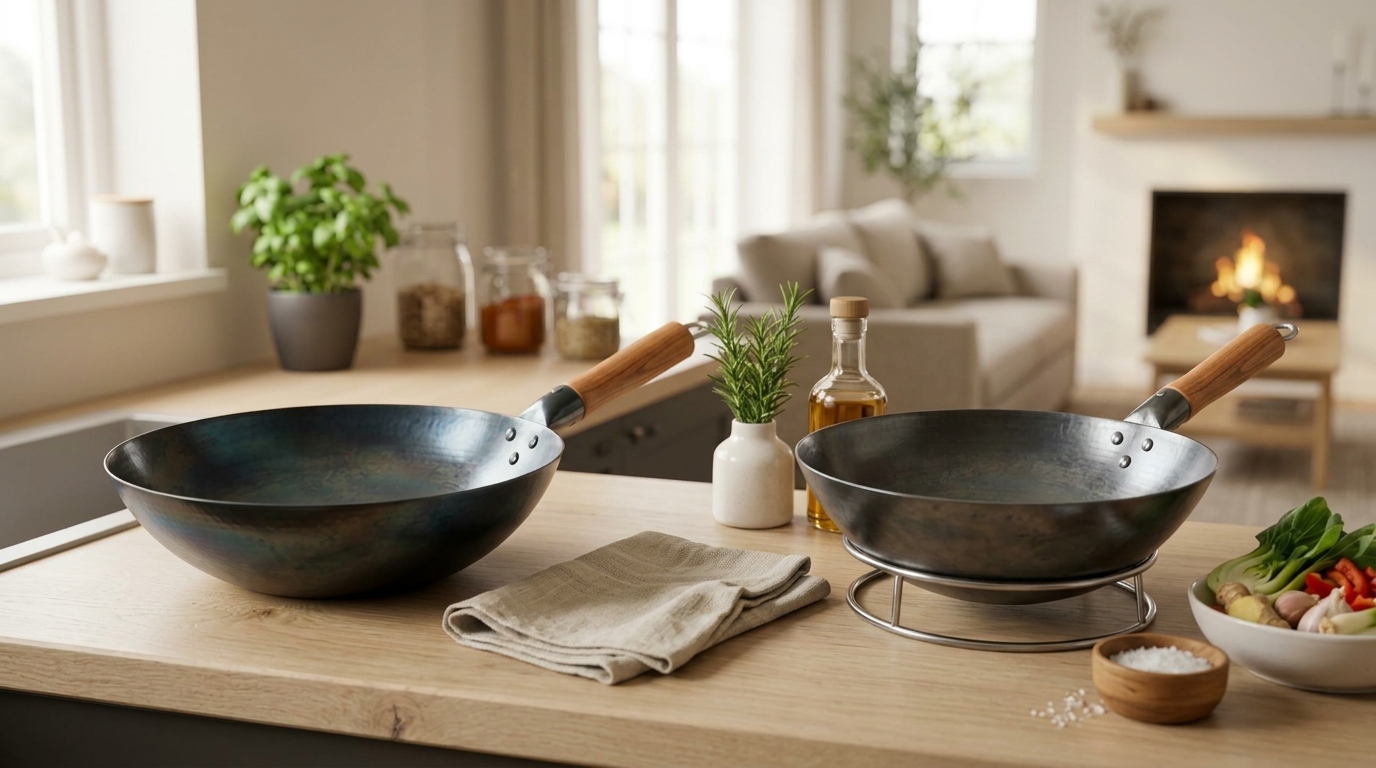
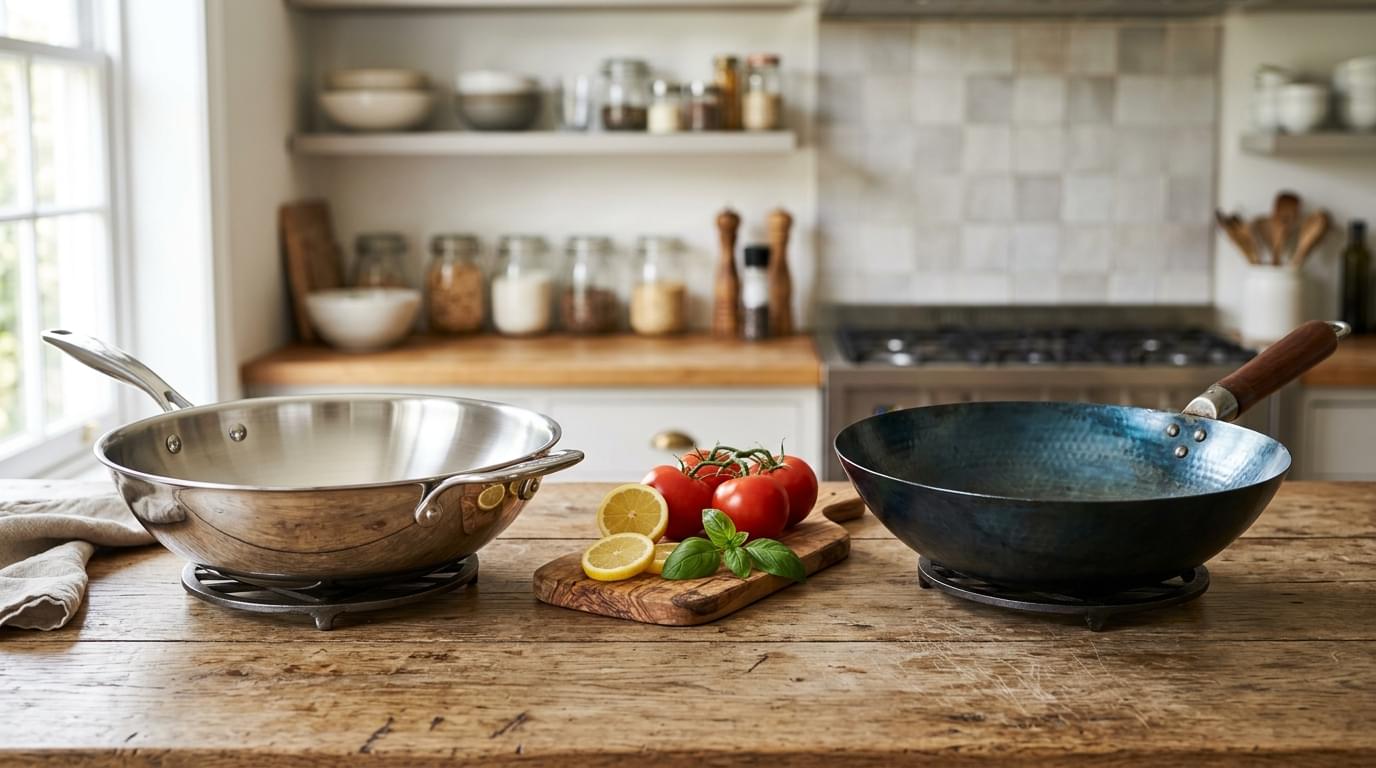
Quick Verdict: Stainless Steel vs Carbon Steel Woks
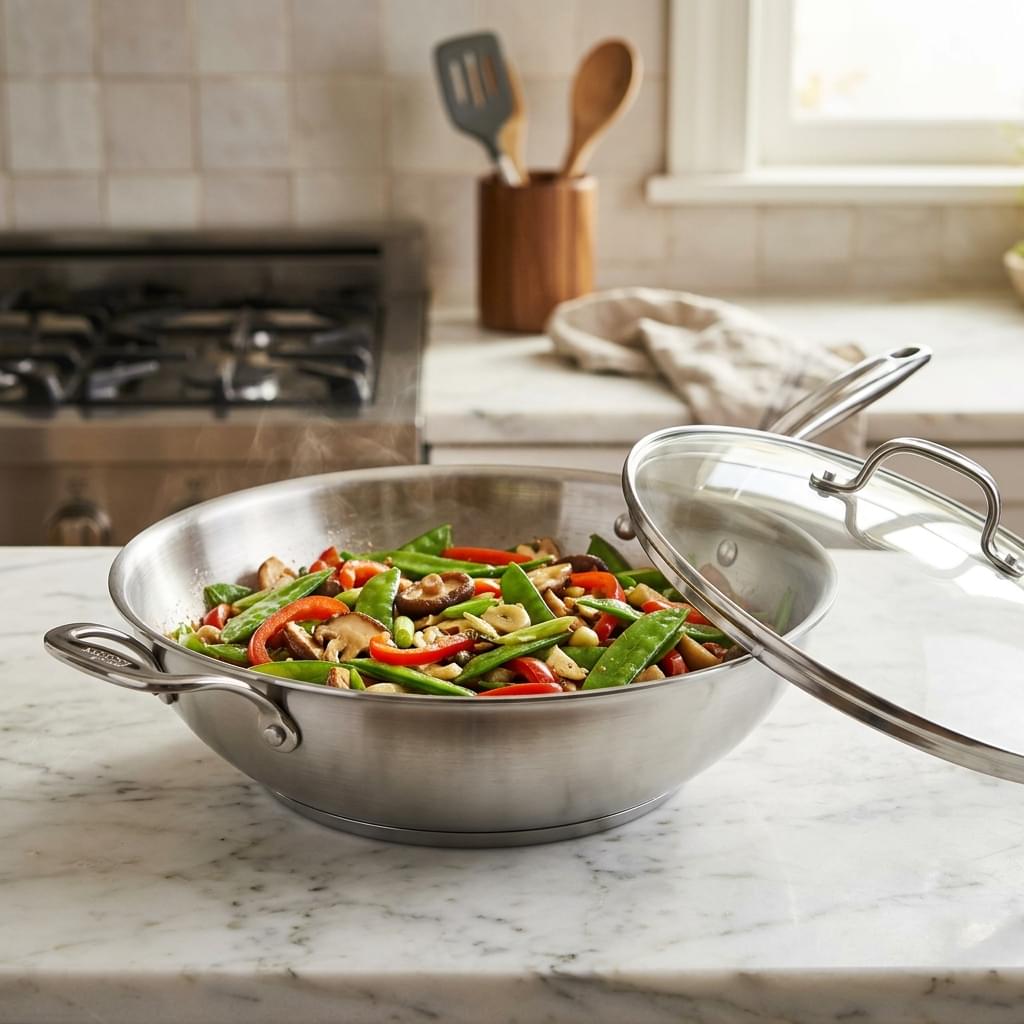
Choose clad stainless steel if you cook acidic tomato glazes, citrus reductions, or vinegar-based braises without worrying about stripping delicate seasoning. Choose seasoned carbon steel if your priority is intense high-heat searing, rapid flame responsiveness, and effortless egg sliding at temperatures above 600°F.
Acid Reactivity: Lemon, Vinegar & Tomato Degradation Test
Carbon steel relies on a delicate polymerized oil patina composed of cross-linked lipid chains bonded to iron crystals.
When exposed to acidic liquids like crushed tomatoes, rice vinegar, or citrus juice for more than three minutes, acidic hydrogen ions dissolve that protective patina.
This acid etching strips the seasoned nonstick layer and leaches metallic iron ions directly into light sauces.
Food-grade 18/10 stainless steel contains roughly 18% chromium and 10% nickel, creating an inert, invisible chromium oxide passive shield.
This passive layer resists aggressive acids completely, letting you simmer sweet-and-sour glazes or tomato curries for hours without metallic taste.
To learn how to protect raw steel surfaces from moisture damage, read our Carbon Steel Wok Seasoning Guide.
Thermal Physics: Clad Aluminum Core vs 1.8mm Rolled Steel
Traditional carbon steel woks feature thin 1.5mm to 2mm pan walls that heat up and cool down within seconds of adjusting your burner flame.
This dynamic response gives experienced cooks total control over flash-searing aromatics without scorching delicate garlic or ginger.
Quality stainless woks like the Cooks Standard utilize a tri-ply clad metal design, sandwiching a thick aluminum core between two stainless steel sheets.
The internal aluminum core spreads heat evenly across the deep curved bowl walls, eliminating cold ring zones on home induction burners.
For technical data on burner contact and ring stability, explore our Flat Bottom vs Round Bottom Wok Guide.
Nonstick Release: Natural Oil Patina vs Leidenfrost Water Droplet Method
A well-maintained carbon steel wok develops a naturally slick hydrophobic surface that releases delicate eggs and starch noodles with minimal oil.
Stainless steel lacks this natural patina and requires proper thermal discipline to prevent stubborn protein bonding.
By heating stainless steel to roughly 380°F until water droplets glide across the metal on vapor cushions (the Leidenfrost effect), proteins sear cleanly without tearing.
Once you master the heat-and-oil sequence, stainless steel releases meats cleanly while building flavorful golden fond for pan deglazing.
For side-by-side searing comparisons against heavy cast iron vessels, review our Cast Iron vs Carbon Steel Wok Guide.
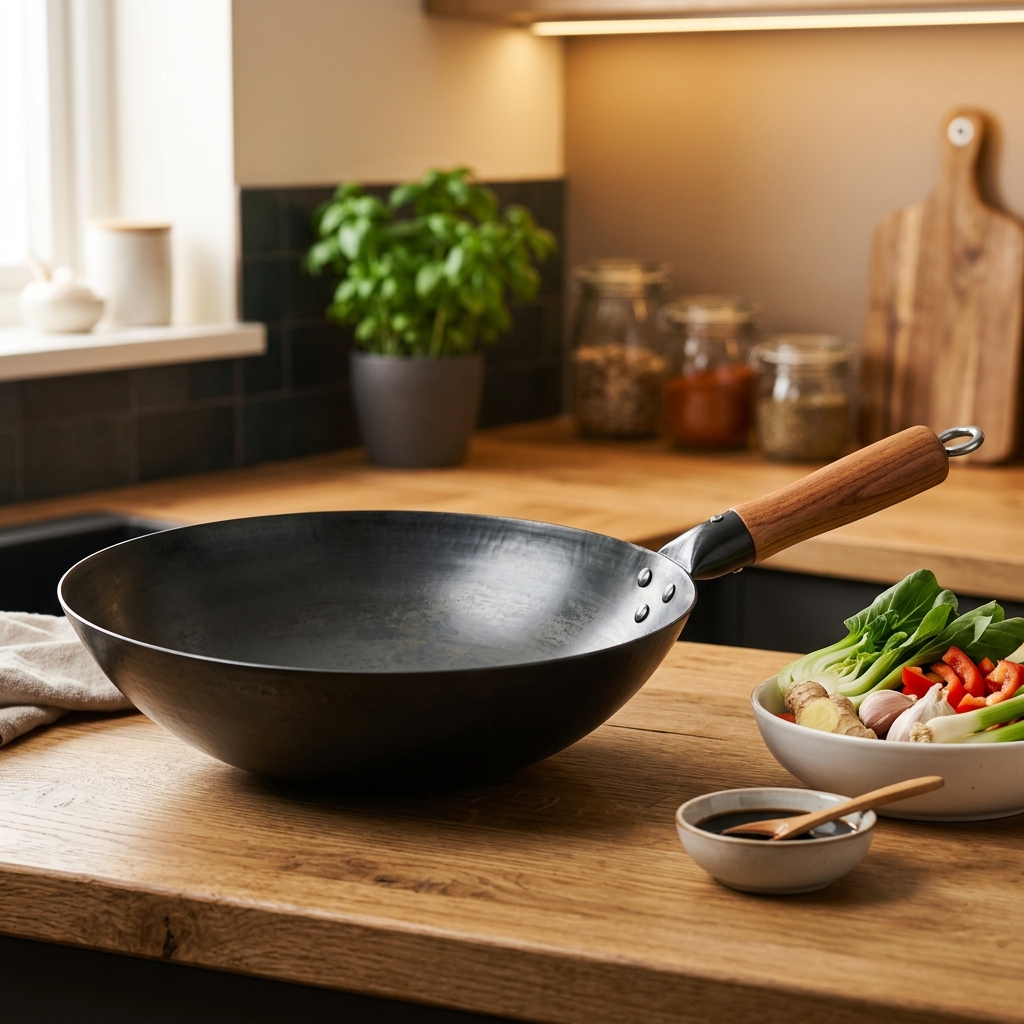
Crafted from high-grade black carbon steel and pre-seasoned at 1000°F, this traditional flat-bottom wok delivers high-heat wok hei flavor without a drop of chemical non-stick coating.
Pro tip: Add to Cart on Amazon to secure today's sale price!
Maintenance Realities: Soap & Dishwasher vs Warm Water Purges
Stainless steel wins decisively on convenience: it is 100% dishwasher safe and tolerates aggressive scouring pads, degreasing detergents, and bar keepers friend.
Carbon steel requires careful hand washing with hot water, immediate stovetop drying over a flame, and an oil wipe-down to prevent surface rust.
For home cooks who value quick weeknight cleanup above all else, stainless steel completely removes maintenance anxiety.
For organizing cooking oils and dispenser bottles near your stove, consult our Glass vs Ceramic Olive Oil Dispenser Guide.
Who Is This NOT For?
Skip stainless steel woks if you want an ultra-light pan for rapid one-handed flipping, as heavy multi-ply clad metal adds substantial wrist weight.
Skip carbon steel woks if your weekly cooking repertoire revolves around acidic tomato curries, tamarind soups, or lemon-herb pan sauces.
Expert Answers & Material Science Q&A
Can you cook tomato sauce in a carbon steel wok?
Brief two-minute acidic tosses are acceptable in heavily seasoned woks, but simmering tomato sauces or vinegar braises will strip the patina and produce a metallic off-flavor.
Does food stick to a stainless steel wok?
Food will stick if added to a cold or improperly heated pan; preheating the pan to the Leidenfrost point before adding oil creates a smooth nonstick vapor barrier.
Is a stainless steel wok safe on an induction cooktop?
Yes, tri-ply stainless steel woks with magnetic exterior bases couple efficiently with induction burners, providing flat, stable heat transfer without wobbling.
Can you achieve wok hei in a stainless steel wok?
Yes, multi-ply stainless woks achieve high temperatures for flash caramelization, though carbon steel remains the preferred choice for commercial high-heat flame tossing.