Quick Verdict: Glass vs Ceramic Olive Oil Dispensers
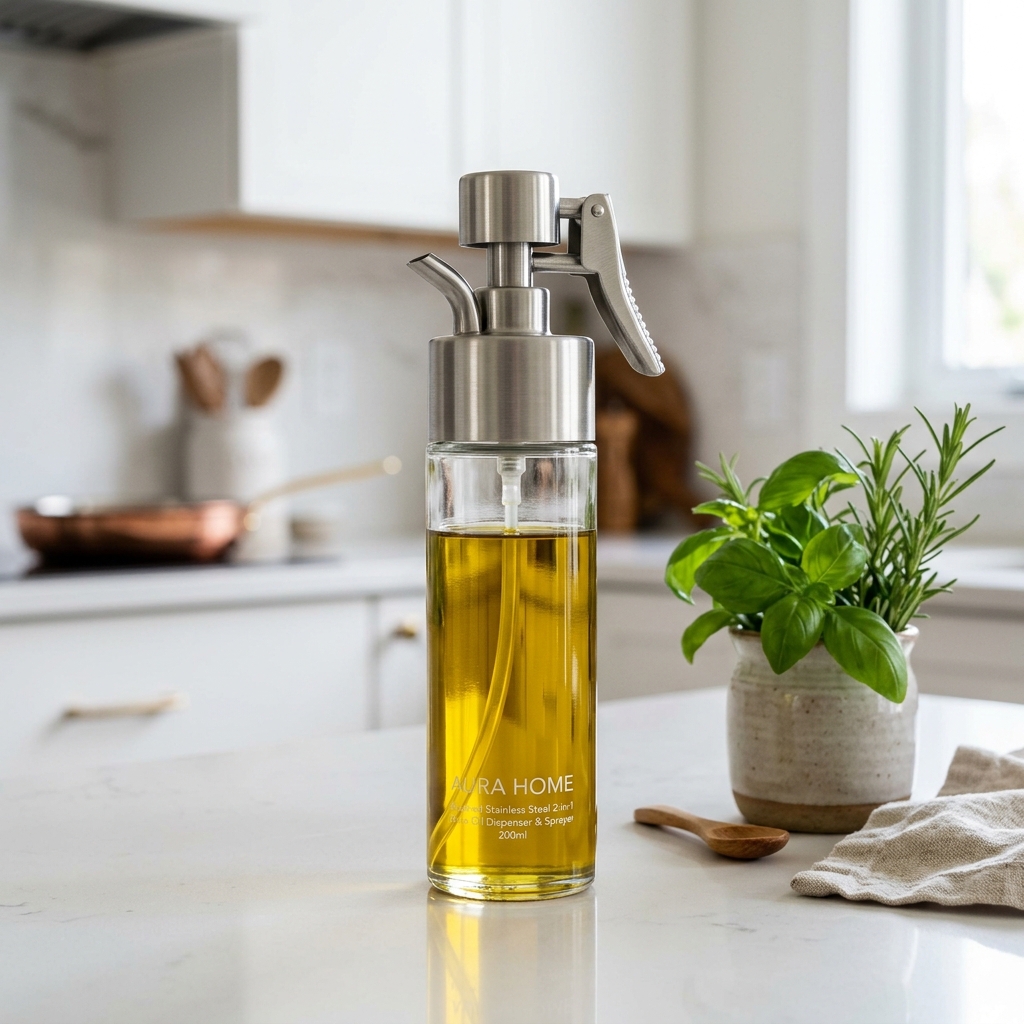
Opaque ceramic dispensers offer the ultimate protection for extra virgin olive oil by completely blocking UV light and insulating against kitchen heat. Dark amber or green borosilicate glass provides excellent visibility for daily high-volume cooking oils when paired with a weighted stainless steel flap spout.
Oil Chemistry: How Light and Heat Destroy Extra Virgin Olive Oil
Extra virgin olive oil contains delicate chlorophyll, polyphenols, and monounsaturated fatty acids that oxidize rapidly when exposed to direct sunlight.
Clear glass bottles allow ambient kitchen light to activate photo-oxidation, turning fresh grassy oil rancid in as little as four weeks.
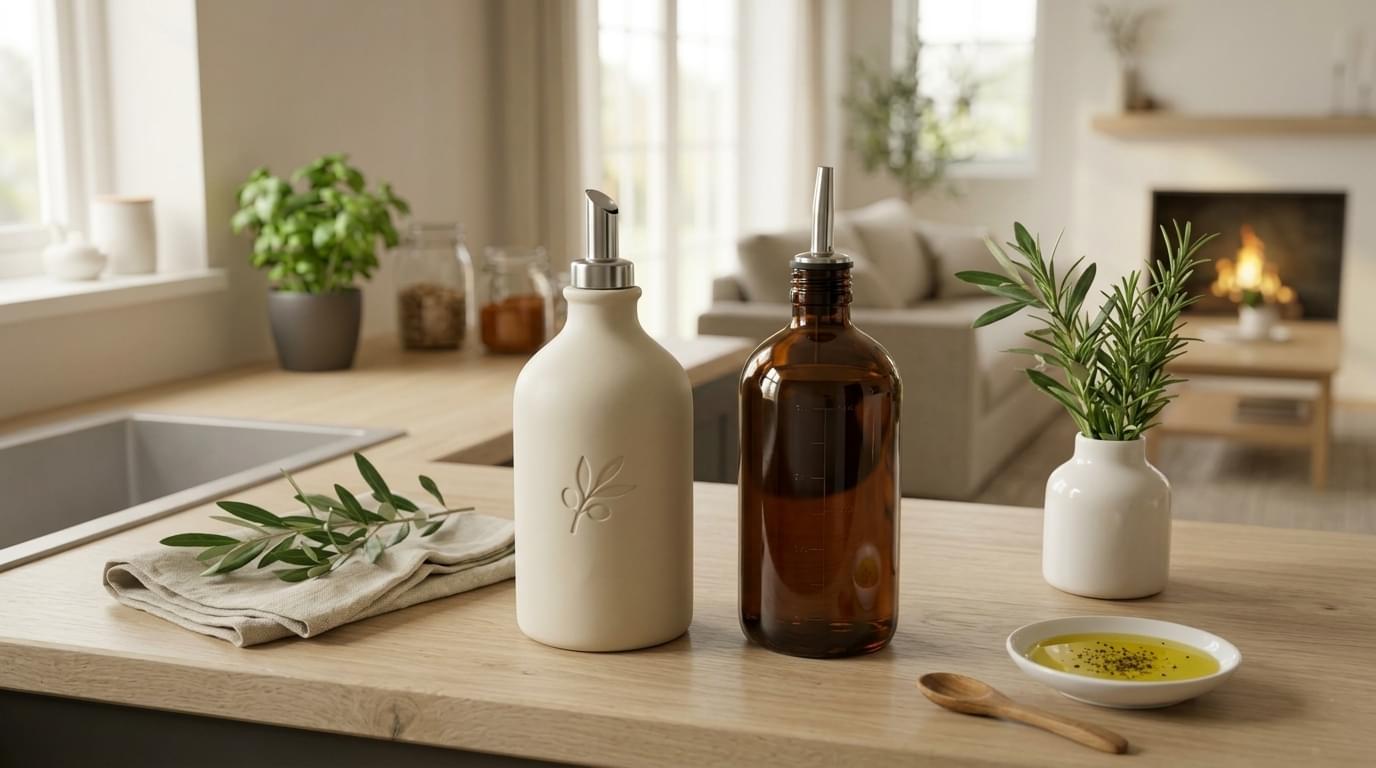
Opaque stoneware and ceramic crucibles provide a 100% lightproof barrier that preserves polyphenol antioxidants and fresh fruit notes for months.
Dark tinted green or amber borosilicate glass blocks roughly 85% of damaging UV wavelengths while letting you monitor liquid levels.
For testing data on oil stability and smoke points, check our PTFE vs Ceramic Off-Gassing Audit.
Spout Engineering: Weighted Flaps vs Tapered Rubber Pourers
A messy oil cruet with greasy exterior drips attracts dust and causes sticky countertop rings.
The best dispensers feature weighted 304 stainless steel gravity flaps that open automatically when tilted and seal airtight when upright.
Internal return vents channel excess droplets back into the bottle rather than letting them run down the outside neck.
Inferior plastic spouts often crack, leak air around the rubber gasket, and speed up oxidation by exposing oil to ambient oxygen.
To explore dual-function mist and stream options, review our Glass Oil Sprayers Guide.
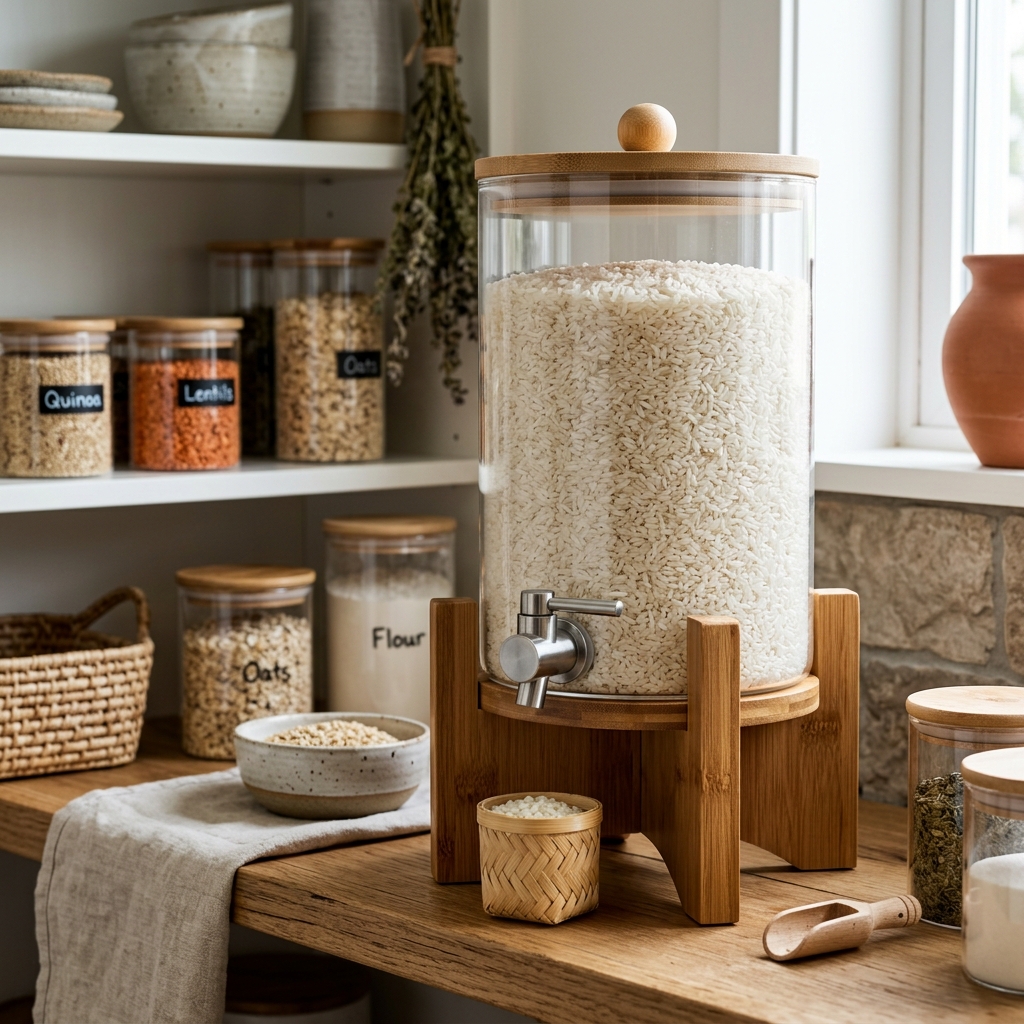
Elevate your open pantry with a heavy-duty borosilicate glass grain dispenser. Features an airtight bamboo lid, solid wooden stand, and bottom stainless steel release valve for easy dispensing of rice, oats, or beans.
Pro tip: Add to Cart on Amazon to secure today's sale price!
Kitchen Geography: Why Stove-Adjacent Storage Accelerates Spoilage
Storing your oil cruet directly next to a hot stovetop or oven burner exposes the oil to cyclic heat waves.
Elevated temperatures accelerate free fatty acid breakdown, dulling the vibrant peppery finish of artisanal olive oils.
Ceramic dispensers offer thicker walls that provide gentle thermal buffering against brief kitchen temperature spikes.
Regardless of material, keeping daily dispensers at least 18 inches away from direct burner flames significantly extends shelf life.
For high-heat wok cooking where rapid oil access is essential, check our Non-Toxic Carbon Steel Wok Seasoning Guide.
Care Protocol: How to Clean Oil Cruets Without Rancid Residue
Never pour fresh olive oil into a dispenser that still contains old residue from a previous batch.
Old oxidized oil clinging to interior walls acts as a catalyst that quickly spoils fresh oil added on top.
Wash dispensers between every refill using hot water, a teaspoon of baking soda, and a gentle bottle brush, rinsing thoroughly.
Allow the vessel to dry completely for at least 12 hours before refilling, because even a single water droplet will cause bacterial cloudiness.
For general aesthetic pantry care techniques, review our Aesthetic Pantry Organization Guide.
Who Is This NOT For?
Specialty countertop oil dispensers are unnecessary for cooks who purchase small 250ml bottles and consume them within ten days.
Ceramic cruets are not ideal for cooks who need to see exact milliliter volume markings when baking or following precise recipes.
Cooks with cramped pantry drawers may prefer multi-purpose sprayers; see our Space Saving Cookware Sets Guide.
For mineral granite and nonstick care rules, explore Is Granite Cookware Safe?.
The Buying Verdict: Should You Choose Glass or Ceramic?
Choose an opaque ceramic oil dispenser if you buy premium cold-pressed extra virgin olive oil and want absolute UV light and heat protection.
Choose a dark tinted borosilicate glass bottle if you use neutral cooking oils daily and prioritize easy volume monitoring and effortless dishwasher cleaning.
Investing in a proper drip-free dispenser elevates your daily cooking rituals while protecting the nutritional integrity of your ingredients.
Expert Answers & Material Science Q&A
Is ceramic or glass better for olive oil storage?
Ceramic is superior for premium extra virgin olive oil because it blocks 100% of UV light, whereas tinted glass is ideal for high-use everyday cooking oils.
Why does my olive oil dispenser leak or drip down the side?
Drips occur when spouts lack a secondary return air tube. Choose spouts with stainless steel weighted flaps and internal drip-return channels.
How often should you wash an olive oil bottle?
Clean your oil cruet thoroughly with hot water and mild soap between every refill to prevent old oxidized residues from spoiling fresh oil.
Can I store olive oil in clear glass bottles on the counter?
Clear glass exposes oil to ambient light, which triggers photo-oxidation and turns olive oil rancid within a few weeks.


